
Pot of Gold?
He is 25. He owns a business and is married. He earns N30,000 a month from his job as a butcher. He is also an avid drug user. This is hard enough given the present economic condition in Nigeria but coupled with ‘other expenses’ how does this young man make ends meet?
A typical day for this young man involves 40 wraps of cannabis, 4 bottles of Codeine, 4 tablets of Benzodiazepine and 10 cigarettes. He takes all of this in one day. This costs him N5,000 everyday. Then repeats it the next day, everyday of the week. Needless to say, he is restless, he has visual and audio hallucinations, which in lay man’s terms means he can see and hear things that are not there. To him however, they are as real as the chair I am sitting on. He usually hears these things when not on drugs. It is possible that he takes all these drugs to stop the voices and to stop seeing things. Only he and a psychiatrist can know for sure.
Now this begs the question, with N30, 000 a month and an expenditure of N5,000 every day, how does he eat or take care of his family? By spending N5,000 a day out of his N30,000 income a month, all his money is gone in less than a week. To put this into perspective, he spends N1, 825,000 on drugs a year. He makes N360, 000 a year from his business. Where does the extra N1,465,000 come from? Does he borrow it? Does he steal it? Does he have other businesses? Why does he need this much psychotropic substances? Are these drugs the only thing he lives for? What about his wife? Does she give him money? What does this mean for her? Is she the breadwinner? Are they in this together? Is help available for him? Does he even want the help?
This young man was recently diagnosed with poly-substance induced psychotic disorder - schizophrenia like. What this means that because of his drug use, he hears and sees things and may continue to do so for some time after he stops taking the substance. He generally has a low mood and is very restless. This means that his drug use has gone so far that to his mind, the drugs are an essential part of his daily consumption, much like food is to others. Without the drugs, his brain senses that something is not quite right.
He was recently enrolled into the Community Mental Health Development Programme of Gede Foundation and BasicNeeds UK and attended a Mental Health Camp. He is one of the occupants of what our more regular readers would remember as the ‘jungle.’ Being enrolled into the programme means he has access to a psychiatrist and healing, however long it may be, is in sight for him and his family. It means he has a chance to leave the jungle and be part of society again. Hopefully.
Written By Zunzika T. Okpo
Media Officer
Gede Foundation Participates in Advocacy Training Workshop in Uyo
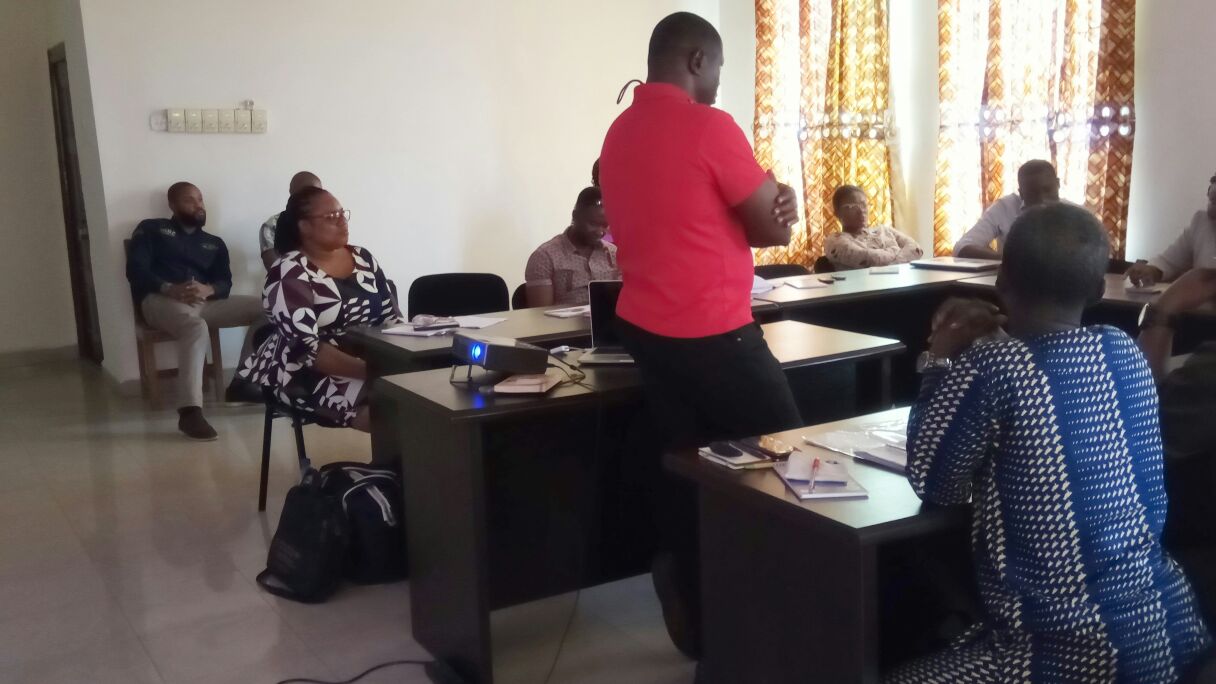
In early January 2017, the Zonal Representative participated in an advocacy training workshop at Uyo Akwa Ibom State. The training was organised by Community Intervention Network on Drugs (CIND) and coordinated by Dr. Ebiti William. The workshop was to sensitise Civil Society Organisations (CSOs) working within its network on the legal regulation of drugs and how to advocate for drug control policy/policies. Participants at the workshop cut across CSOs working in the area of drug prevention, demand control, treatment and rehabilitation.
The key message at the training was the need for stricter legal regulation or control policy on the production, supply and use of illicit drugs. A few of the CSOs present at the workshop shared their field experiences working within drug users’ communities. They noted that several interventions with this high risk group do not usually get the desired impact due to the following reasons; (i). Misinformation on the source, quality and type of drugs people consume. Most users have no idea of the source, quality of drug or drugs mixture they consume. An ex-user shared with the group that sometimes users are sold paint (powdered paint) for ‘crack cocaine’. He told the group that there is a dramatic change in the trend of drug use from the 1980s and 1990s. These days, creativity has been introduced into the use with complex “cocktails” of unimaginable substances ranging from pharmaceutical products (like Tramadol, Codeine) to dung, paint and other conventional drugs. He also noted that legal control would give cover over packaging, vendors and outlets, users will be more open to treatment and freely access health facility for help, (ii) Drug abuse or use is treated as a crime rather than a public health issue. A case of alcohol use was compared to a wrap of cannabis. A person who is a drunk is not seen as a criminal but one caught with a wrap of cannabis would most likely be considered a criminal and can be detained, in other cases imprisoned or fined. A critical consideration of both cases would present issues for public health as both alcohol and cannabis abuse present similar negative outcomes, health impact and social affectation. All drug users are not drug dependent or addict and drug use is not synonymous to crime but problematic drug use would present criminal outcomes. Therefore, regulation and better health education would be more effective and humane ways of encouraging people to make healthier lifestyle choices, (iii) prohibited drugs are unfortunately affordable and this makes it difficult to control supply, (iv) drug users are mostly labelled and stigmatised resulting to affected persons developing fear of ‘coming out’, delay in seeking necessary care, fear of discrimination and self stigmatisation.
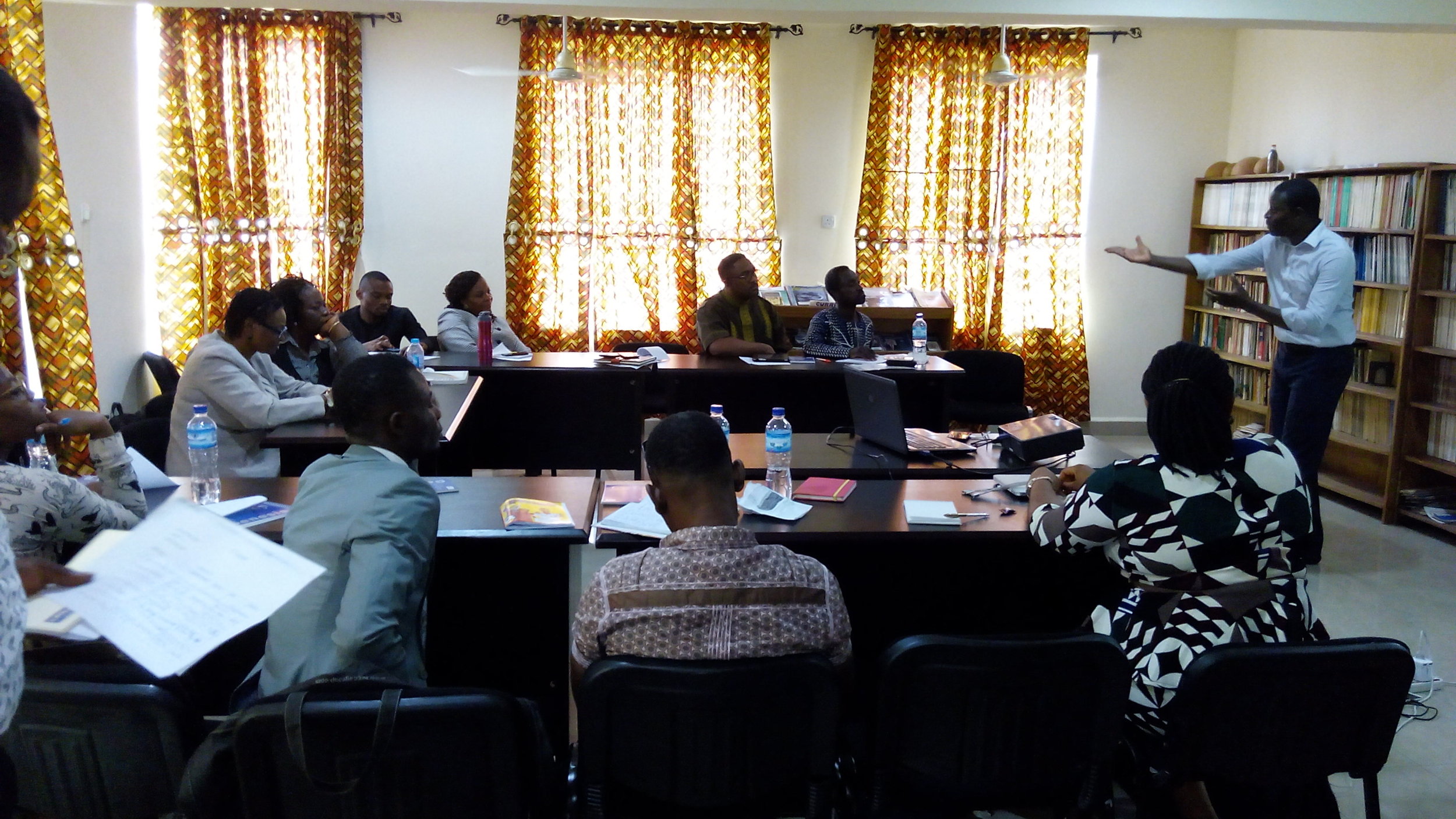
This calls for CSOs and other stakeholders in the health sector to support government efforts in curbing and bringing to the barest minimal the impact of drug abuse on individual health, society through awareness programmes, lectures and for CSOs to advocate for stricter policy control and regulations on drug production, supply and demand.
This training came at the time when Gede Foundation is reaching out to communities and stakeholders to deepen its partnership in intervening for mental health as an essential aspect of health development programmes.
Written by Ekaette Udoekong
The Zonal Representative
Drug Use: What You Don’t See
Submitted By Ete-Obong - Calabar South
It is hard to understand or appreciate what an addict goes through if you have never been addicted to anything, be it drugs, sex, food or alcohol.
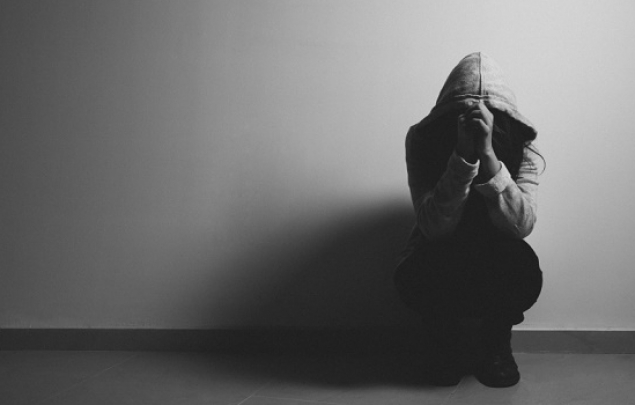
Most people do not understand or see reasons why or how drug users become addicted. They may wrongly think that those who use drugs are delinquents or lack moral principles or willpower and that they could stop their drug use simply by choosing to or if they are pressured by loved ones. Drug use changes a person mentally, physically and socially in such a ways that make quitting hard, even for those who want to. People who use drugs or alcohol do so for various reasons. Some are influenced by peer groups or social affiliation, others like, me just started off with drugs out of curiosity and to experiment. Therefore, you would only understand or handle a drug user if you understand the reasons for use, the environment and user social mix. I don’t smoke I do ‘crack’, and never in public just in my closet so no one suspects I am a drug user. I keep track of what I take, when I take it and how much I take. For over 10 years I have maintained this habit. I am reserved so it’s very difficult to imagine me with drugs. I drink sparingly and not in public because I represent an outstanding business firm.
Who can honestly say that they don’t use drugs? I’m not necessarily talking about illegal drugs, like marijuana but alcohol, nicotine, caffeine, codeine and aspirin are all drugs. However, the way drugs are spoken of in our society is hugely problematic. Not all drug users are problematic, like me for instance. Legal drugs like tobacco and alcohol are responsible for deaths as much as illegal drugs each year, one might argue even more so. People like me need help and want to come out and not to be stigmatised or seen as criminals. Being a drug user is a psychological problem and being seen as problematic is just as psychologically demeaning as the problems associated with usage. And what people don’t see is how much users want to stop, how much we want to be able to speak out and get help, how much we wish we never had that first drag or sniff.
These substances damage the brain and cause a lot of mental and physical health problems. There should be continuous awareness on the effects and impact especially in schools. Drug education should enjoy a face-off just as much as HIV and ebola do. I am able to manage my situation now because I can afford the “good stuff” and I am able to hide my identity but I cannot speak for the future. However, there are others who cannot and need help. I want to stop the use of this substance and get clean but this comes with a lot of fears that I do not know if I am ready to face.
Mental Health Camp Round 1 for 2017 — Mpape
Gede Foundation held its first round of 2017 Mental Health Camps (MHCs) in Mpape on Saturday, 28th of January 2017 at the Primary Healthcare Center. As always, there was an array of cases both old and new.
The tone of the MHC was quite different from the previous ones held in 2016. There were more cases of depression and anxiety (including other mood disorders) and less of the more common seizure disorders and mental retardation. Two cases in particular spring to mind. The first is a lady who lost her husband 5 years ago. When she heard about his death, she completely went into shock and it appeared as though she could not comprehend what had transpired. She began talking to herself, her blood pressure shot up and she was hospitalised. This, coupled with other symptoms she described led the Psychiatrist to conclude that she had had a psychotic break. She was hospitalised, treated and released. However, she had a relapse and was taken to a traditional healer. For some time now, she has been taking herbs to suppress her symptoms but they are still present. Her mood is always low, she talks to herself or completely out of turn. Furthermore, she has had suicidal ideation but has made no attempt yet. She was one of the first people to be enrolled in early April 2016, but had refused to attend any MHC. There was a similar case, with an elderly lady whose low mood and hopelessness was obvious even to the untrained eye. She sat down by herself and only spoke when spoken to. She’d been hospitalised several times but her symptoms are still present. She barely sleeps, is always tired and can hardly get out of bed. The Psychiatrist spoke to her at length and encouraged her to take her medication and to return for follow up.
Our regular readers will recall the schizophrenic lady that was chained to a pole in a church due to her wandering tendencies and erratic behaviour. After over a year of being chained and starting medication last year, she is now much better and back home with her family. Unfortunately, another woman has taken her place in the church and has been tied to a pole - with a similar condition. Efforts to reach the carer by our Community Based Volunteers (CBVs) proved futile. Another user that is doing a lot better is the young boy that used to have about 5 seizures daily. After starting medication, he is doing a lot better and as long as he remains compliant, he will remain seizure free. There were other old cases where users relapsed due to non-compliance. They were encouraged to continue with their medication but they pleaded for help from the Foundation as they could not afford the medication. It is important to mention here that the Foundation which is a BasicNeeds franchisee, gave livelihood training to some of the users and carers with the hope that they will be able to sustain themselves and be reintegrated into the communities.
The CBVs brought to the Foundation’s attention news of users who abuse drugs. There are 3 boys whose mother has reached out to the Foundation through the CBVs to enrol them. However, upon hearing this news, the children beat up their mother. The smallest of the boys is 9. One of them wanders the streets and is very violent and aggressive when approached or when he senses provocation - warranted or unwarranted. The CBVs will keep trying to enrol them into the BasicNeeds Project so they can have access to help.
The next MHC will be held in Mararaba. Please come back to the blog to read more!
Dissemination of Findings of the Gede and IHVN Prevalence Study on Depression, Alcohol Use Disorder and Suicidality Among People Living With HIV-AIDS in Nigeria
On January 20, 2017, the Institute of Human Virology in Nigeria (IHVN) and Gede Foundation hosted participants in Nassarawa State to discuss findings and results from the Study that was championed by both organizations in 2015.
The Study was conducted in the Federal Capital Territory (FCT) with 1187 respondents in 3 HIV treatment sites — Asokoro District Hospital, Garki District Hospital and University of Abuja Teaching Hospital Gwagwalada. Using the DSM-IV diagnostic criteria, the lifetime prevalence of major depressive episode was 28.2%; 7.8% engaged in harmful alcohol use; and 14% thought of committing suicide in their lifetime.
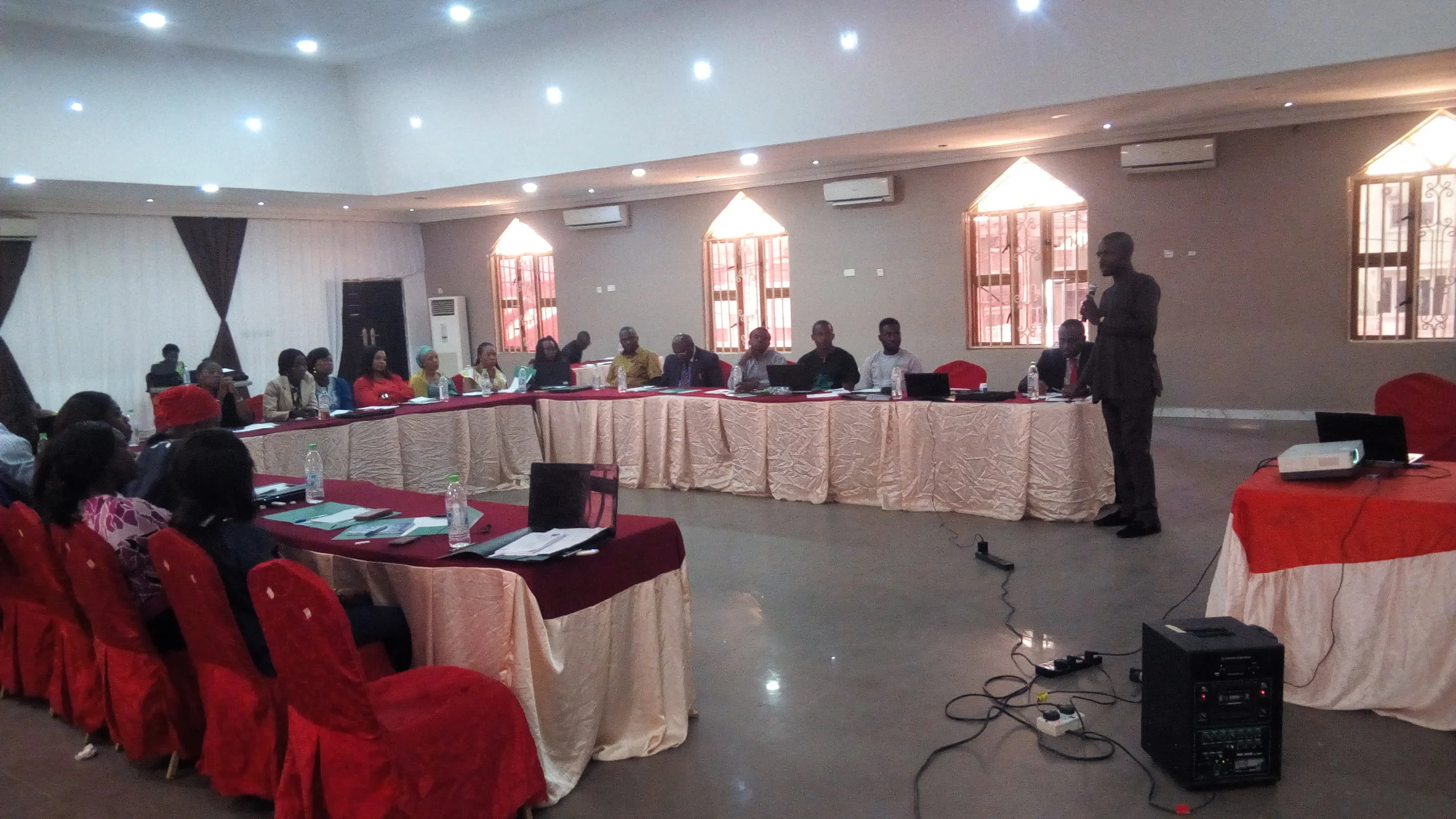
Heads of HIV treatment sites in the FCT, treatment site managers, researchers, interviewers, and members of the press attended the dissemination meeting in Nassarawa. This meeting was the first time the results were made public in order to generate discussion on the integration of mental health services into the HIV/AIDS treatment platform using evidence-based information.
Dr. Ernest Ekong (IHVN Director of Clinical Services and Co-Investigator for the project) introduced the study, its objectives, and major results. Mr. Chidozie Bright Edokwe (Project Field Coordinator) presented the section on research methods, while Mr. Godwin Etim (Performance Director, Resource Mobilization and Partnership Management, and Project Field Supervisor) presented the conclusions and recommendations.
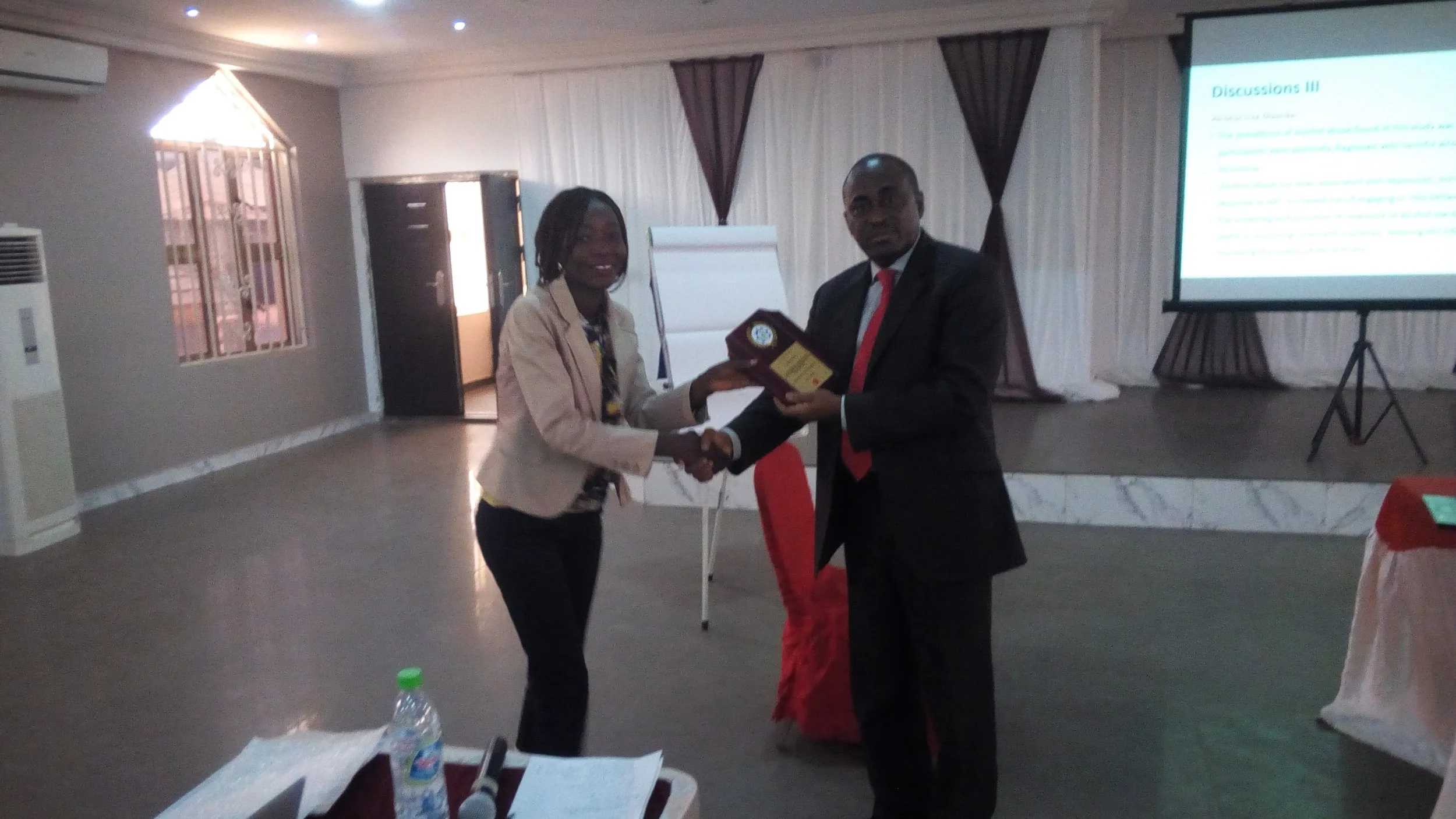
Participants viewed the study results as essential, representing significant evidence that supports the need to integrate mental health services into the HIV treatment and care pathway in Nigeria. IHVN acknowledged and recognized the work of those who were directly involved in field activities. The complete report will be widely published and disseminated in due course.
ADVANCED RESEARCH FOR HEALTH AND DEVELOPMENT: METHODS AND SKILLS FOR ACHIEVING IMPACT TRAINING
Gede Foundation, in collaboration with King’s College London (KCL) and the Nigerian Psychological Association (NPA), held a two day training (24th and 25th January2017) at the Foundation’s headquarters in Abuja on Advanced Research for Health and Development. There were participants from leading organisations such as the National Agency for the Control of AIDS (NACA), Society for Family Health (SFH), Institute of Human Virology in Nigeria (IHVN), Nigeria Centre for Disease Control (NCDC), Excellence Friends Management and Care Centre (EFMC), Society for Community Development (SCD), the Centre for the Right to Health (CRH), Centre for Family Health Initiative (CFHi) and individuals who attended independent of their organisations.
Dr. Rosie Mayston, a senior researcher from the Centre for Global Mental Health, King’s College London, had this to say about the training, "We had two great days research training- it was very inspiring to be a part of this, alongside Prof. Andrew Zamani and colleagues from Gede Foundation. It was really exciting to see so many people from governmental and non-governmental agencies with enthusiasm for research. I am very much looking forward to taking part in future similar events!” Dr. Mayston included theory as well as practice in her lectures. She began with a seemingly simple question - what is research? and then moved to different types of research methods.
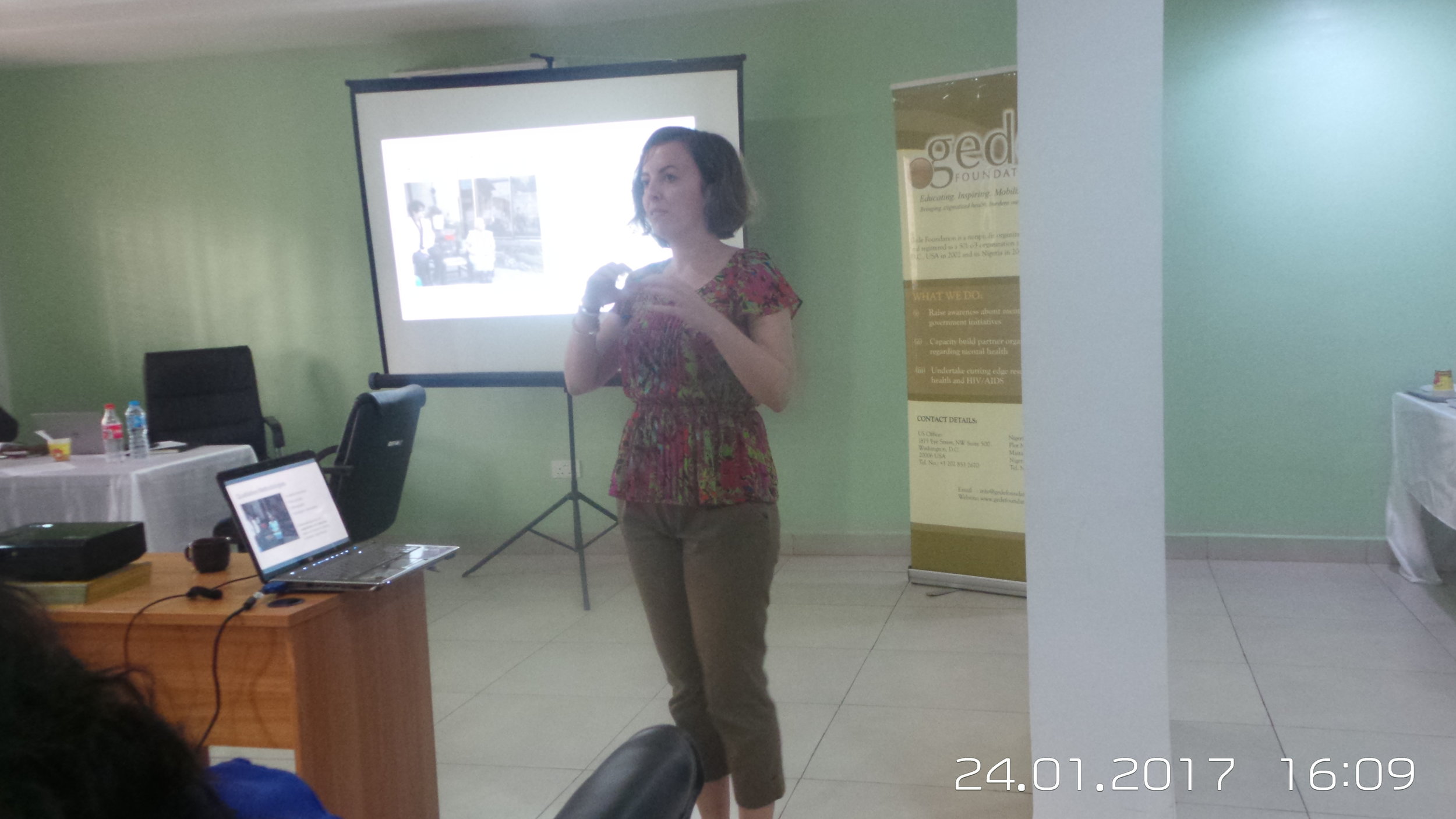
Professor Andrew Zamani, the President of the Nigerian Psychological Association and also the Dean, Faculty of Social Sciences, Nasarawa State University, was one of the facilitators and covered ethics in research, research in health development in Nigeria and other topics.
The training was fashioned in such a way that it appealed to audiences who had little or no experience in research as well as expert researchers. At the end of the second day of training, there was a panel discussion that included Professor Zamani, Dr. Mayston and Gede’s Managing Director, Mr. John Minto. Among the topics discussed were were challenges and opportunities related to research dissemination, partner engagement and sourcing key information
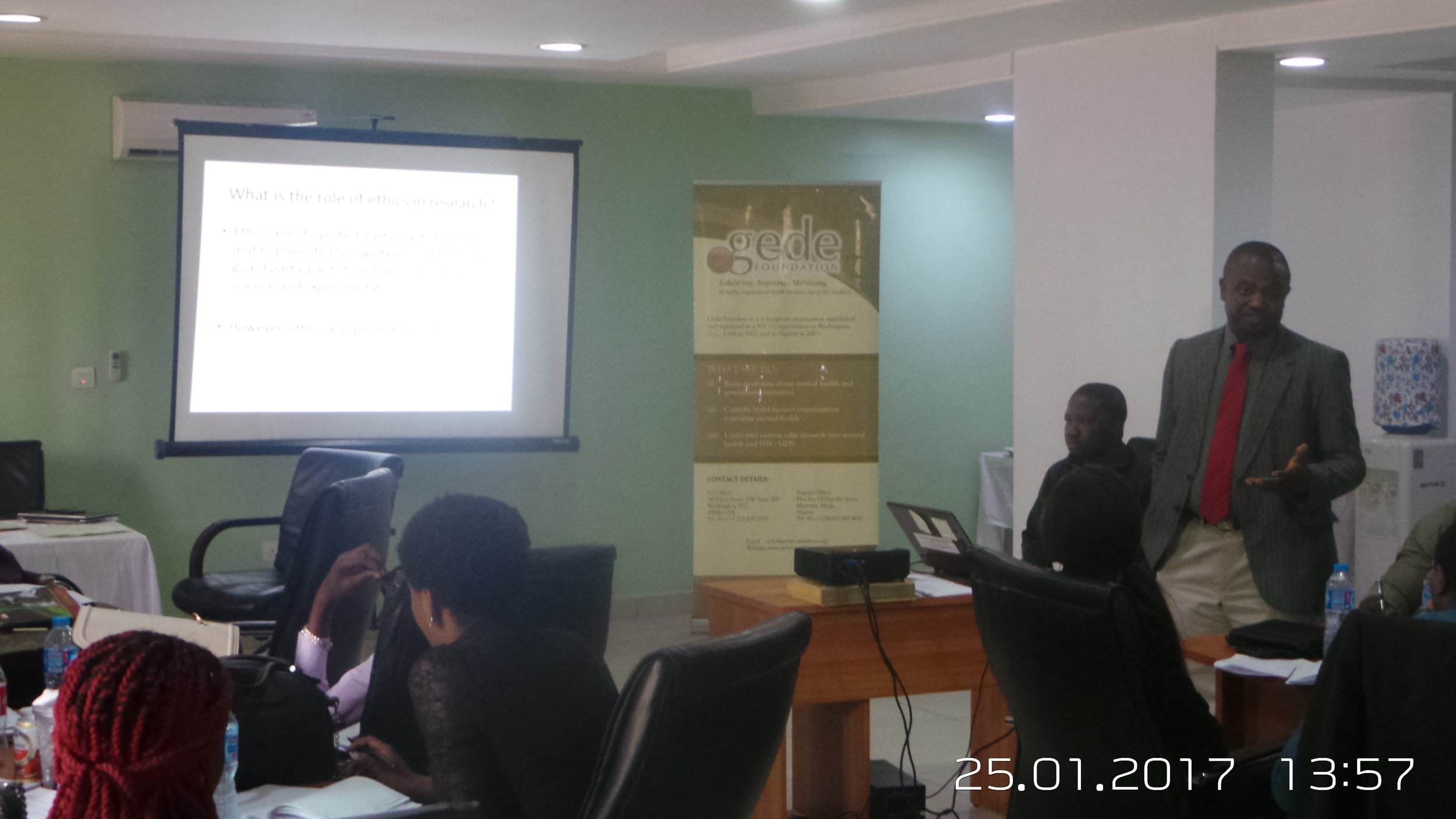
Participants also asked questions relating to research as well as contributions on how research can be made more effective. One of the participants noted that there is need to generate culturally relevant research. She said that usually, research methods are not adjusted to fit Nigerian standards but instead, carried out as they would in other parts of the world and this may affect the results. Professor Zamani agreed with her and noted that there were gaps in research which are being addressed to ensure better collaboration between organisations.
The training ended with calls from participants for more in depth training. Some organisations wanted personalised training for their staff members. This is definitely an avenue that the Foundation, King’s College London and the Nigerian Psychological Association will explore. The training offered opportunities for participants to recognise the significance ofquality research in adding value to their work and this is reflected in their feedback from the training. If you would like to be offered similar opportunity, please email training@gedefoundation.org

Please come back to the blog for more on further trainings with KCL and NPA.
John S. Adakolo: Recipient of Award from IHVN
John Simon Adakolo, received an award from the Institute of Human Virology in Nigeria (IHVN) for his significant contributions to the Study of Mental Health (Depression, Alcohol Use and Suicidality) among HIV Positive Patients in Nigeria in 2015.
John Jr, as he is called by fellow colleagues at Gede is an energetic and inquisitive young man who is always eager to learn new things. It is his enthusiasm that has seen him through his journey in Gede Foundation where he started as a cleaner in February 2003 to a Programme Officer in 2014.
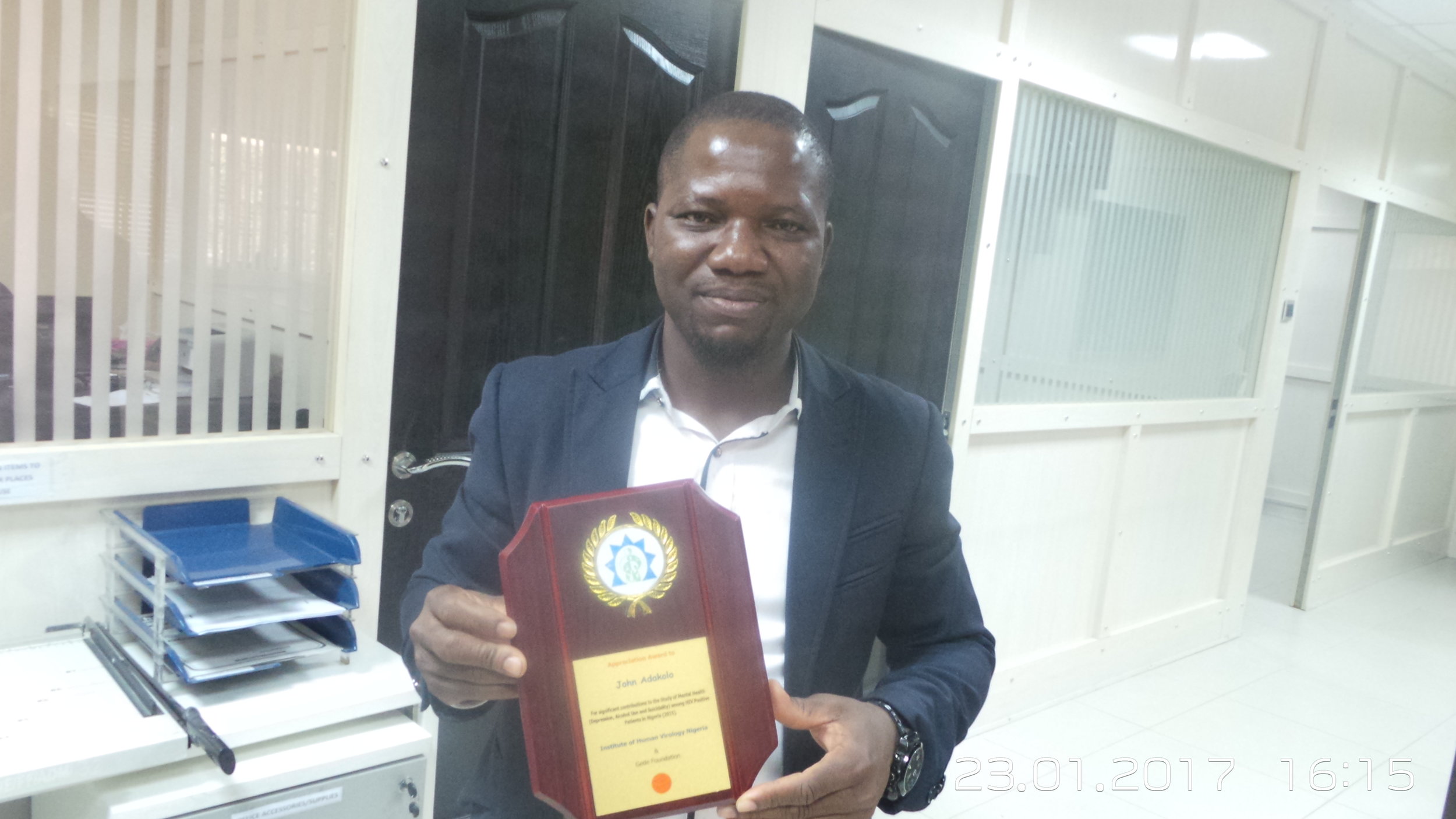
The Foundation, through this blog would like to recognise and applaud John Jr on this achievement - which is just one of several awards and certificates that he has been given due to his hard work and dedication.
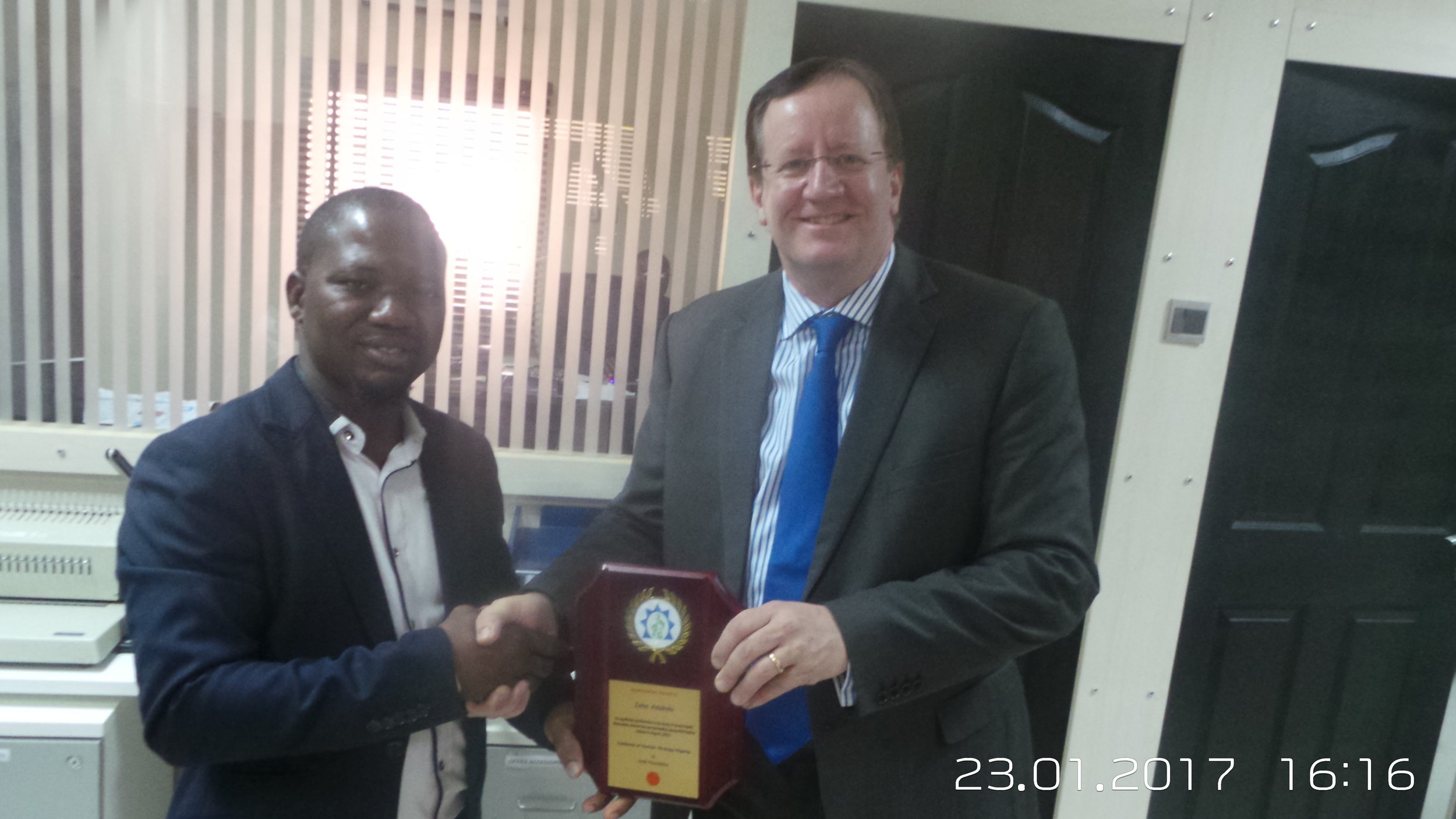
In his own words, “I am one of the happiest people right now. I was not expecting such an award from such a reputable organisation like IHVN. It is not only a dream come true but also a reminder that hard work pays.”
Congratulations John!
‘The Jungle’
When I first heard the term, I could not contain my laughter. I thought the Community Based Volunteer (CBV) was joking. I’m quite certain a few of you may be wondering why I am not getting to the point already. First of all, this is not your typical jungle. It is not what the dictionary defines as “an area of land overgrown with dense forest and tangled vegetation, typically in the tropics.” That is what came to mind first. Instead of dense forest, this jungle has human beings, in the place of tangled vegetation, there are all sorts of illegal drugs found in this jungle. This is what the CBV was trying to tell me. Even more scary, the jungle has a chairman. The drugs found in the jungle range from marijuana, to cocaine to codeine to other controlled and/or illegal substances.
Apparently, the jungle is a well known place. There are all kinds of people in the jungle. Some of them have had formal education, others have not. Some have families, others do not. It is a community of one thing and one thing only - illegal drugs. A lot of those that are found in the jungledo not have regular incomes or even any forms of income at all. Most of them are between the ages of 19 and 44 years old. This is worrisome as these are the productive members of society. Needless to say, substance abuse is on a steady rise in the country and the ease with which people can access the drugs is alarming. There are even registered pharmacies that have a backdoor and sell controlled drugs to anyone that would ask and pay.
The jungle is only one place. There is a myriad of such places all over the capital. Sometimes when you stop at a traffic light, a person may approach slowly and whisper if you want ‘Tuxil C’. It is a legitimate drug for coughs and colds. However, it is abused so much that it is in the same category as Codeine.
I did a bit of research and discovered there are jungles all over the capital. Sometimes, the police raid them but they still come back. Perhaps people know the dangers of taking illegal drugs, perhaps the dangers are acceptable depending on what the users are trying to get away from or numb. As our regular readers would know, illegal drugs can have dire consequences not just physically but also mentally. There are terms such as drug induced schizophrenia, korsakoff syndrome (alcohol induced), depression and yes, even jail time.
I recall a story of a lady that seemingly had all it together but was taking illegal drugs to keep up the charade of being the perfect mother, wife, sister, daughter, business woman and friend. One day, she could not take it anymore and ended it all. Other people’s situations may not be as dire as this woman’s, but if you find yourself in the jungle, please do not hesitate to ask for help. You would be surprised at the help that is available. Be a beacon of hope for others - pave the way.
Written by Zunzika Thole - Okpo.
Musings Of 2016 As 2017 Begins…
2016 was a year of “lessons learned”. And the lessons were many. Mental health has always been a fascination of mine and in my quest for knowledge, I learned so much that I needed to press the brakes and reflect. Below are a few things that came to mind.
- In my eight months as Media Officer of Gede Foundation, I have learned a lot. There have been a lot of challenges and even more lessons. No disrespect to mental health professionals who obviously know more than I do, but I have learned a little in the past eight months that I find myself diagnosing people - in my head. I have to consciously stop myself from diagnosing people’s mental illnesses. Most importantly because I am unqualified and I suppose even more important, I AM NOT A DOCTOR.
- Going into the job, I was worried. I thought mentally challenged people were definitely violent (I blame TV, especially American Horror Story - Asylum). I have probably crossed paths with mentally challenged persons before but not the way I did working in the field with Gede Foundation. My first encounter, which most of our regular readers know about, is the lady that was chained to a pole in a church - for over a year. Even after I learned her condition, I was scared. My main concern was MY OWN SAFETY. My fear was that a lady chained to a pole would somehow break free and attack me. Is that even rational? Thinking back, I am quite ashamed. It was HER SAFETY that should have concerned me more. She has been unchained now and is back with her family. To me, that is one person reached, one person helped, one voice that can speak. Note to self: It is not about you.
- There have been others of course. Others riddled with so much pain, disdain and heartache in their lives yet they still soldier on. One girl that has seizures so bad but she doesn’t let that restrict her actions. HOPE AND COURAGE
- “So what?” One might ask. Well, people suffer. More than I have ever been exposed to. There is an 8 year old boy who has no less than 5 seizures in a day. He is bruised and battered and ridiculed because of his condition. Also because of his condition, he cannot go to school. His family is so poor they can’t afford his medication. The young boy is doing better now. We did not do much for him but the little we did was enough for the father to understand that his son’s condition is medical and there are people willing to HELP.
- Then there is a young bubbly lady who is bipolar (I did not diagnose her). First time I met her, she seemed OK. She was bubbly, happy and saw no reason why she had to be at the mental health camp. I dug deeper and discovered she was in a manic phase and when this happens, she loses all her inhibitions. This includes sexual inhibitions. For this reason, many men take advantage of her. It was recommended that she take an HIV test as well as a pregnancy test as it had been a few months and she hadn’t had her period. Some members of her community look down on her because of the aforementioned encounters with men. With a little more enlightenment, perhaps they will show a little COMPASSION.
- Then there was a man, just 31, shouting and screaming at something/someone we could not see. His reality is apparently as real to him as mine is to me. There are a lot of productive things he could be doing with his life but he can’t because he had (at that time) had no access to medication. Not everyone can understand mental illnesses, but that does not make them any less real. Furthermore, not everyone understands malaria but because its a physical illness, it is accepted.
- Last but definitely not the least is the substance abuse. I learned that there is a place in Mararaba, Nassarawa State, called the ‘jungle’. This is where all kinds of illegal drugs can be found. Even more interesting, the ‘jungle’ has a chairman. When I first heard this story of the ‘jungle’ I broke into fits of laughter. For that reaction, I am ashamed. It saddens me that it is so easy to get illegal drugs.
It is my hope that 2017 leads us closer to “No Shame” and “Zero Stigma” for those who have mental illnesses. HAPPY 2017!