The Christmas Festive Season With Its Peculiar Stressor

By Ekaette Udoekong

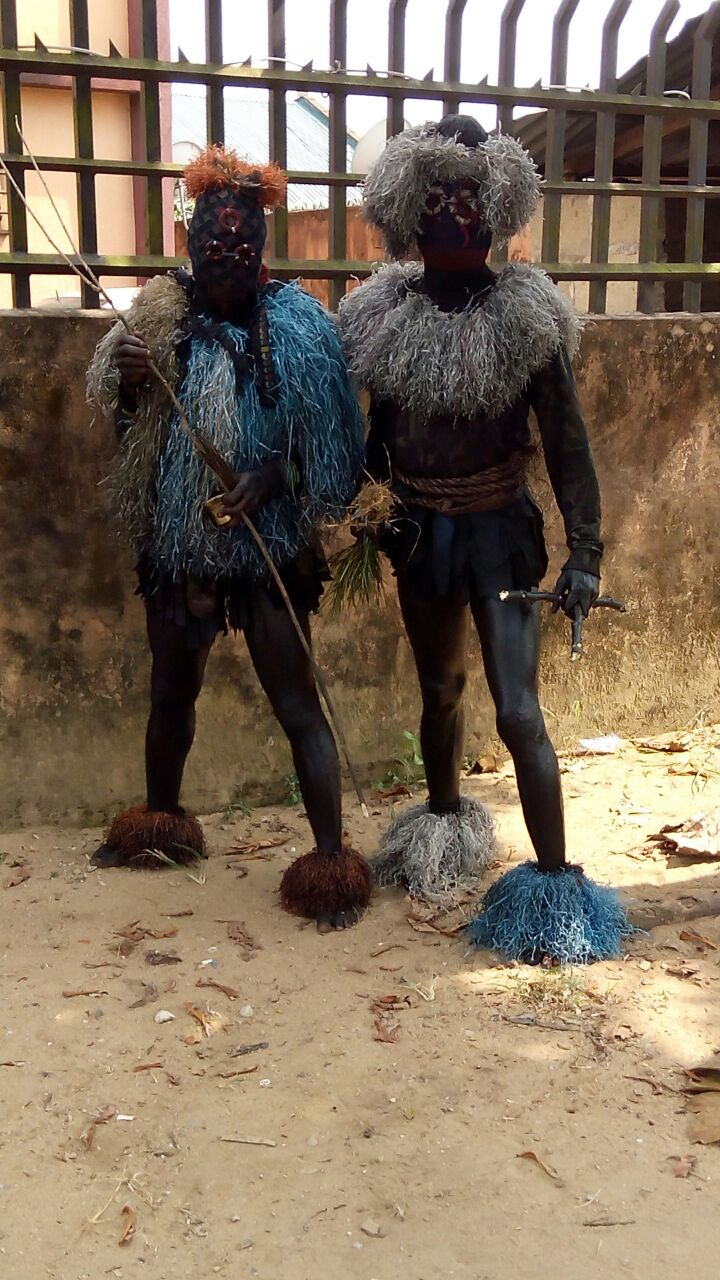
The holiday season should be a time to relax, rest from the stress from work, unwind with family and friends. During the festive season in Calabar, the streets are flooded with children adorned in colourful attire to perform traditional folk dramas and masquerades. Others mask themselves with coloured raffia or hide their faces under heavy makeup as they pass in groups to showcasethe best masquerade in a combination of song, dance, and drumming. Unfortunately, this tradition is slowly dying out as fewer children participates but rather are enrolled in the largest street party – the Calabar Carnival. However, this tradition still remains a major way of celebrating Christmas in most remote villages in the south-south. 

During this period there is a common trend; A throng of young adults and a few elderly people at bars and clubs. There is an increase in alcohol consumption, bandits and pickpockets at bus stations, religious activities, loud music and a hike in the prices of commodities. So far, these difficulties and stressors have not stopped Nigerians from celebrating Christmas with gifts and family reunions.
Before the actual day of Christmas, preparations and commitments are made and these could be overwhelming stress for some persons. Shopping, financial strains, traffic on major routes, crowded marketplaces, and unwelcome guests, late night harassment by hoodlums, hike in the prices of commodities and the fear of commitments in January the next year. Typically, I would say that we live in a Christmas culture where spending of money in the last month of the year equals love, charity, kindness and relaxation for a ‘fulfilled’ year.

Typically, for families and individual who are unable to follow the Christmas season trend, it becomes depressive and for those who lose loved ones during the season celebration is done in sadness or no celebration at all.

In general terms the holiday season come with a lot of stress and anxiety that could be managed by:

  • Early preparation including early shopping and budget trimming (to accommodate needs not wants)
  • Keeping certain aspects of home life constant and maintaining usual routines to avoid stress throughout the season. 
  • Doing things in moderation; Food and drink are a big part of Christmas festivities for most people overindulging in drinking, other overeating which may constitute a health issue.

It’s been reported that 1 in 20 people find Christmas to be more stressful, the holiday season does present certain challenges and stressors which can become overwhelming. If unmanaged all positives pleasure that come at Christmas time can be undermined although certain level of stress is almost unavoidable at this time of year. As this is December, many towns and cities would be empty as most Nigerians will move from the cities to their ancestral villages to be with family and friends. It is needful to be aware of your bodily responses to stress and focus on what’s really important for you at this time of year.


Choices, Genetics or Circumstances?

“Is alcoholism genetic?” he mumbles. 

“I’m not sure, I can’t say I know for certain,” I answer. Or at all, I think to myself, I am, after all, not a mental health expert. 

I met Stephen through a mutual friend. Stephen is 33 years old. He began drinking at a young age, around 13 years old. His parents were divorced and so he thinks they did not really pay much attention at the time. In addition, they were mostly drunk.

He has this quiet and calm demeanour about him when sober, almost shy. He begins by telling me drinking alcohol is something that is done regularly in his family house. All his relatives drink. He recalls one time though, when his mother took him to a native doctor to see how his drinking could be curbed. She had given up drinking and wanted the same for him. He was given animal blood to drink and for a while, even the smell of alcohol made him throw up but after some time, he continued. He has a steady job which he is actually very good at. The only concern his bosses have is that he doesn’t seem to be taking care of himself in terms of hygiene. He scoffs as he says this. He does look somewhat disheveled and its past 2pm. He also looks thin and not in the way fashion tabloids depict. I ask him if he eats regularly and he shakes his head. He would rather drink. His hair is light brown - almost like one who has spent too much time riding on an okada during the harmattan. 

Stephen says he was in the hospital a few weeks back. “Something to do with my liver,” he says. I’m not sure what to ask, so I just let him tell his story. Drinking alcohol for him was a rite of passage. Like most people in his family, he thought that it was something he could control. Even as he went to classes drunk, forgot to eat, drank more alcohol than water, he did not realise the grip that alcohol already had on him. Without it, he recalls, he was withdrawn and bitter. After a few, he was the life of the party. Soon, people figured that was the real him. Little did they know that the real sober him was a calm, considerate and loving brother and son. As time went on and he got in university, he drank more, missed classes and barely passed his final year exams. But it was not only him, he says. It is the same with his siblings. Only a few do not drink. At least not as much as him. He says that sometimes he goes for a drink with his uncles and brothers and one drink turns to two then five then 8 until they lose count.  

He keeps fidgeting and twirling his fingers. I ask him if he is drunk right now. He laughs and says no. He has been trying to stop but it has not been easy. Yes, he had a few drinks two days ago and he is itching for more. He has not been to work in a while as he is too weak. He says even just one bottle will make him feel alive. Even talking to me seems to be weakening him more. 

As I get up to leave, I offer him some food. He smiles and takes it. He looks so forlorn that I am scared to leave him. He jokes about getting a wife, perhaps that would straighten him out. His question lingers on my mind though, is alcoholism genetic? Does that mean Stephen stood no chance at all? Are some people more prone to addiction than others? Like I told Stephen, I do not know, but I intend to find out more. 

Written by Zunzika, with Stephen's permission

How Long Can One Grieve The Loss Of A Loved One?

By Ekaette Udoekong

A few months ago I was at the beach market – Esuk Atu to buy fresh fish and shrimps. Euk Atu is small seaside beach with few fish traders and fishermen. Business happens here more in the morning and a little in the evening depending on the weather and tides. The beach is usually deserted in the afternoon. At the beach you can see women and young children crossing from one end of the river to another with goods, and of course fishermen returning with fish, shrimps and sometimes oysters. 

I got very concerned about the women and children who travel by water in a small canoes and are not afraid of the tides and the water.  One of the women told me that she focuses on an object or thinks of something beautiful and not on the waves when traveling on water. She does not listen to the tossing of the canoe or battering by the water, she busies her mind on how to sell off her fish and how to get her creditors to pay their debt. Then I turned to one of the fishermen, a boat owner and asked how he manages if the tidal waves caught up with him at sea. He laughed and said he has not experienced it yet though because he had learnt over time to understand the tides (every fisherman knows!). 

Most weekends when I get to the beach the fishermen had already washed off the nets and are on-shore in a make-shift bar to take ofop-ofop or combine, or have breakfast, or are selling off fish to middlemen. I observed a few times that a particular fisherman does not celebrate at the bar with others but just exchanges pleasantries, sells to a particular middleman and leaves with his two boys. It’s obvious he does that so that he does not have to stay at the beach longer than necessary. Then I began to asked questions and for more than two months I have frequented the beach market to winthe friendship of some of the fishermen and the middle-women. This weekend I got my story.

The fisherman I have been observing lost his oldest son and the loss caused a deep grief that had taken him off social life including sharing a drink with fellow fishermen. It has been over 2 years since his son died. According to the middle-woman I spoke with, he has not overcome his grief. My source said he only greets and sells only to one middleman. According to my source he used to be a jolly fellow participated actively at the beach but is very withdrawn now. 

How long can one grieve the loss of a loved one? There is a link between grief and substance abuse problem but in this case could grief cause one to stop drinking? Are there other stressors that could trigger such a change in a person for over 2 years? 


NATIONAL HIV PREVENTION CONFERENCE 2016

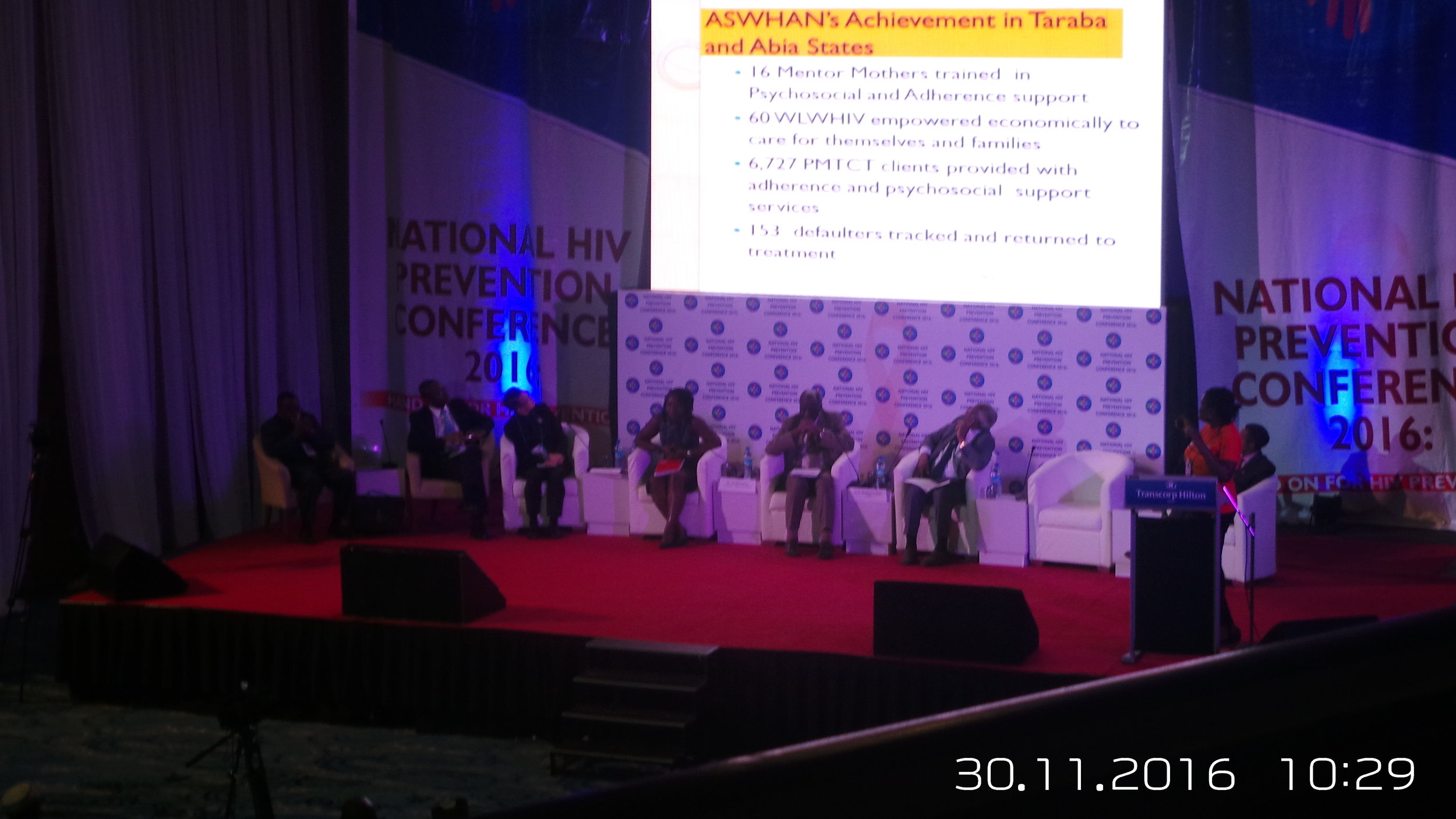
Government agencies and Not-For-Profit Organisations came together for a conference at Nicon- Hilton Hotel in Abuja for the first National HIV Prevention Conference that lasted 3 days - November 28 - 30h 2016. The conference provided an opportunity for all those involved in the prevention of HIV at the national as well as sub-national level. 

In his welcoming remarks, Dr. Sani Aliyu, the Director General of the National Agency for the Control of AIDS (NACA) said “Nigeria bears a significant portion of the global HIV burden. Through this conference, Nigeria is leading the way for fostering reflections, galvanising knowledge that are geared to bridge the prevention gap in Nigeria.” 

The conference attracted scores of supporters and sponsors. The first day was dedicated to youths and was organised by the Society for Family Health. There was an overview of HIV response amongst young people in Nigeria (presented by NACA). The youth summit also had a capacity building session as well as a skills building workshop. 

 After the Youth Summit, the next day was filled with numerous programmes that were running concurrently. There were professionals and experts from sponsors and supporters of the conference. Among them was the Federal Ministry of Health, United Nations, Management Sciences for Health, Institute of Human Virology, The World Bank, USAID, UNAIDS, Silver Lining Initiative, Network of People Living with HIV and AIDS, The Presidents Emergency Plan for AIDS Relief, Society for Family Health and a lot more. 

In one of the sessions themed “Towards the First 90: Leaving No One Behind”, Dr. Sani urged everyone to move from policy to practice. He mentioned that most people only test and there is a big problem with adherence to drugs. He encouraged health practitioners to support their patients and form self care groups for those living with HIV. Ms. Assumpta Reginald, National Coordinator of ASHWAN (Association of Women with HIV and AIDS), shared her experience with Abia/Taraba Mentor Mother experience. The project was focused on leaving no mother behind. She noted that the project was focused on prevention of mother to child transmission of HIV and AIDS. 

In another session, targeted at key populations showed research done in Ibadan on poverty, sexual practices and vulnerability of female sex workers to HIV/AIDS. This was particularly interesting as some of the sex workers may use alcohol or other addictive substances to ‘cope’. The presenter explained that while their mental health is not the primary concern, the former sex workers have psycho-social activities and other relaxing techniques. 

Overall, the conference was very informative and it is important to note that the supporters and sponsors present recognise the link between HIV/AIDS and Mental Health. In one of their presentations they noted that some of the people living with HIV/AIDS are prone to depression, alcohol/substance abuse and even suicidal ideation. It is therefore imperative to not only continue to treat the physical BUT the mental health aspect so as to have a more holistic approach. As Dr. Han Kang from USAID said, “In as much as we should test and treat, we should also test and prevent.” This includes those found negative and prevention of any mental health issues that may come up due to the diagnosis. This is indeed a reaffirmation of Gede’s work towards the integration of mental health and HIV/AIDS. 

Exploring Potential In Promoting Community Mental Health In Nigeria

On the 17th of November, Gede met with N4A represented by Sophie McCann (Executive Director), Rebecca Tinsely (Founder) and Barbara Bauer (Trauma Psychologist) and a representative from AMES, James Ogenyi. Present from Gede was the Managing Director - John Minto, Performance Directors - Godwin Etim (Resource Mobilisation and Partnership Management), Cynthia J Ticao (Research and Advocacy) and Jeremy Boglosa (Organisational Development and Support Services). Also present from Gede were Kizito Ebhohimen (Monitoring and Evaluation Manager) and Zunzika Thole-Okpo (Media Officer). 

Brief and detailed histories of Gede and N4A were given and James gave a snapshot of what is happening in North East Nigeria. The situation in the north is most dire and needs more NGOs to help not just with nutritional services but with the mental health and psychosocial aspects. He noted that, often, his team travels with local vigilantes in order to access those in the camps and provide them with the little help they need. Some locals are so traumatised that they cannot speak at all. Those in the camps are exposed to some relaxation techniques so as to take their minds off of that has happened and is still happening. Some Boko Haram wives are also present in the camps and the name brings with it some level of stigma. A number of suicides have taken place in the camps and one well has been termed the ‘well of death’. This is where some people have gone to commit suicide. The well is still in use despite its name and negative connotations. 

Going forward, James noted that what is needed is for more NGOs to come together and help, much like what N4A have done in Rwanda and Uganda. Sophie McCann agreed that there are indeed many similarities between what the Rwandan Liberation Army (RLA) did and what Boko Haram is doing. 

Given the positive outcome they have had in Uganda and Rwanda, Nigeria would benefit from N4A as people try to rebuild their lives and overcome the wounds, physical, emotional and mental, that Boko Haram has caused. 

On Friday, November 18th, Gede and Network for Africa (N4A) met with the National Primary Healthcare Development Agency (NPHCDA). The meeting was primarily for Gede to introduce N4A to NPHCDA and for the Agency to discuss their emerging plans related to community based mental health.

N4A explained, in detail, the amazing work that they have done in post genocidal Rwanda and post war Uganda. They have done tremendous work in reaching over 9000 people in both Uganda and Rwanda and equipping them with skills such as conflict resolution, counselling in trauma and sustainable livelihoods as they embark on rebuilding their lives. They asked what they could do in the case of the Boko Haram insurgency in North Eastern Nigeria. 

In return, the NPHCDA was very excited to host N4A and assured them that working together in addressing mental health issues of the survivors is of the utmost importance. They also commended the N4A for their efforts in other parts of Africa and hope that the success they had there, could be replicated here. Furthermore, N4A was applauded for going through the right channels in trying to help Internally Displaced Persons (IDPs) in Nigeria. 

Please return to the blog for more news!

Stigma (Often) Begins At Home

By Susan

‘Drama queen’, ‘attention seeker’, ‘too emotional’, ‘easily offended’, ‘cry baby’; Those are just a few terms I heard growing up. I did not know how to express myself without feeling judged by those closest to me. Therefore, from an early age, I learned to put a lid on it. 

My first suicide attempt, at age 11, was never discussed. I was diagnosed with cerebral malaria. To this day, I have no idea how. I’d taken two handfuls of pills and everyone in the house knew but no one questioned the doctor’s diagnosis. Perhaps they were trying to protect me. I do not know. The only person who came forward told me, ‘I know what you did, don’t even do it again.’ That was the end of it. I found solace in books and writing and another cringeworthy practice - self harming. I’d burn myself or use a razor to cut myself and cover things up pretty well. This, at least for a while, seemed to keep my emotions in check. I have numerous scars everywhere. I tell people I was a tomboy. I was but that is not the reason why I have so many physical scars.

I recall writing numerous suicide notes, expressing my feelings in detail and leaving them for my mother to find and I was told to stop being dramatic. For instance, in another failed attempt, my mother got extremely upset and told me to use something stronger next time and get it right. What’s a 15 year old supposed to do with that? 

It should not be a surprise that I started to self medicate to manage my feelings. I was content being hazy, emotionally numb, just floating through life. I used to be fun and funny but at some point I was just existing - going through the motions, doing the bare minimum of what was expected of me.  When I started having panic attacks, I confided in a close relative and she laughed and told me those were ‘white people problems’. In trying to find the reason for my constant hyperventilating, breathlessness and all that comes with panic attacks, I was taken to a few hospitals to find the source of my problem. I saw every specialist my mother could afford (I suppose at this point it was getting quite serious) and they all told her the same thing; ‘let your daughter see a psychiatrist as there is absolutely nothing wrong with her physically.’ Her response was that her daughter was not a crazy person and therefore had no business seeing a psychiatrist. Of course I was depressed and suicidal and genuinely scared to be alive but I was not supposed to be. It just did not happen. I’m supposed to be a strong black woman. Eventually she agreed for me to see a clinical psychologist. It took a while for her to break me. Even when she did, nobody else in the family knew about it. No one knew I’d seen a psychologist. I continued to self medicate even after diagnosis, at this point it was like second nature to me. 

Sometimes I wonder if I would have been a different person had I been diagnosed earlier. I would like to help other people dealing with the same problem but I have often been asked about the effect that would have on my family. So I am shut down again. How can I help?

GEDE AND THE ROYAL SOCIETY FOR THE ENCOURAGEMENT OF ARTS, MANUFACTURES AND COMMERCE (RSA)

Gede is delighted to announce that the Foundation’s Managing Director, Mr John Minto, has been invited to become the RSA’s first “Connector” in Nigeria.

In accepting the role, Mr Minto noted that, “the RSA is one of the most reputable civil society organisations in the world and has been in existence since 1754. The RSA’s Mission (seeking to address the world’s challenges by unleashing the creative potential in every individual) is mutually compatible with that of Gede (bringing stigmatised and underserved health burdens ‘out of the shadows’ through research, partnerships and advocacy). I look forward to Gede and the RSA developing a Nigeria specific programme which will bring a wide range of people together to address many of the challenges facing the country both now and in the future.”

As an initial programme, Mr Minto noted that Gede and the RSA have started discussions focusing on ways in which “creativity” can be engaged to address the challenges facing Nigeria (and many other low and middle income countries) in relation to population and disease changes, with more people living longer coupled with the increasing prevalence of non-communicable diseases (such as mental illness, diabetes, cancer) which impact significantly on lives and health systems.

Please return regularly to Gede’s website to learn more about the Foundation’s collaboration with the RSA (www.thersa.org). You can also discuss the evolving programme with Mr Minto through jminto@gedefoundation.org

Loss. Relapse. Recovery

By Susan (From ‘Clarity of Mind’)

He ‘gave’ me my first Bible. I say ‘gave’ because he came back from boarding school, forgot it, and I took possession of it. That was my first Bible which I read from beginning to end. It was called Bible Stories for Children and I treasured it. I think it was the first book I ever owned. When he came back for holidays, my name was scrawled all over to let him know that I was now the owner. There wasn’t much objection but we fought a little. The next book I acquired was a story book with over a hundred fairy tales. Again, as with the Bible, I scrawled my name all over it and eventually this became our tradition. He would bring me a book each time he came home. We would fight about why I did the crossword puzzle instead of leaving it to elders - him. We would fight about taking books before one finished reading. We fought about so many things but we were the only ones allowed to hurt each other. An outsider would not dare come between us. I suppose that was how we showed love. This was my brother. And then my brother died. And once more my world came crushing down. The hole my mother had left in my heart, he took a bull dozer and dug even deeper. That is how my heart felt.

I had to be the strong one this time around. The others had been there for me when my mother died. They rallied around me when they discovered I went to visit her gravesite and helped me accept her death. It was therefore my turn. In order to keep my depression in check, which I knew would eventually creep up on me, I decided to start numbing my pain once more. I was very efficient. I helped everyone else but myself. There were people around me too but I did not want that. I went further into my Codeine and all was well. Or so I thought. On one of those days I decided to quit, I broke down. I did not want to leave my bed. I just wanted to sleep and never wake up. How could my brother be gone? I wanted to be gone too. Everyone would be better off without me. I made plans. I bought sufficient drugs, a mix of them to ensure that I would not wake up. To further ensure success, I also got hold of surgical blades sharp enough to slash my wrists and finish the job. If you recall, I’d mentioned memory problems and when it was time to get the job done, I could not for the life of me remember where I had hidden my drugs. The drugs were to numb me so I would not have to feel the pain of the blade. I could not go through with it with only the blade. And that’s when the flood came in and completely overwhelmed me. I did not get out of bed for a week. I had responsibilities but I could not be bothered. Person after person came to talk to me. My partner brought his friends, my friends, his family, mine, my child. I looked at my child’s sad little eyes, not knowing what was wrong with mummy and I pulled myself out of bed. It was probably the hardest thing I ever had to do. However, I did not stop with the codeine and Valium completely.

What continues to bother me as I continue in my recovery is that those that know about my situation treat me like an egg, like if they said something hurtful, I’d break. Maybe I would, maybe not. The constant whispers and looks, the ‘are you sure you can do it?’ questions make me want to stay caged in my head. It is comfortable there. I come out once in a while to the real world and its terrifying but as I said earlier, I have good days and great days. At this point I should add that I also have bad days. But every morning I get up and every so often I ask myself if it is worth it. And you know what? I’m still here so it must be.  Till next time - This is Susan.

Catch up with Susan's earlier blog here http://www.gedefoundation.org/blog/2016/10/31/clarity-of-mind

FGDs Completed for the CRS-SMILE Validation Project

For those of you who have been following Gede’s project with Catholic Relief Services (CRS) on the Validation of Mental Health Screening Tools for Vulnerable Children as part of the Sustainable Mechanisms for Improved Livelihoods and Household Empowerment (SMILE) Project, we are happy to report that as of the end of October 2016, the team has made good progress in the validation process.

A total of 25 Focus Group Discussions (FGDs) to review the screening tools on Depression, Behaviour Disorder and Post-Traumatic Stress Disorder have been completed in 12 communities in 4 LocalGovernment Areas in the Federal Capital Territory.  Another set of 2 FGDs were facilitated on Resilience.  FGDs were facilitated in Hausa or Pidgin English – the languages into which the screeners were translated.  The participants to these FGDs were male and female children aged 12 to 17 years old, enrolled in the SMILE Project, through the Civil Society Organisations (CSOs) that work with CRS for the project.  They are, (i) Catholic Action Committee on AIDS, (ii) Elohim Foundation, (iii) Justice Development and Peace Commission, and, (iv) Society for Community Development.  

With the completion of the FGDs (plus transcription) and the final review of the translated screeners, our team of researchers and clinicians will soon go back to the communities to validate the screeners with a target of 400 respondents.  

Please come back for more exciting updates.