Secondary Scholarship Programme 2016 In Calabar

Public schools in Cross River State resumed on September 14, 2016 for the 2016/2017 academic session.

Currently, the Gede Foundation – Lafagre Africa Plc Educational Support Programme has 100 secondary school students spread across 26 schools within six Local Government Areas (Calabar municipality, Akpabuyo, Bakassi, Akampa, Ogaja and Calabar South).

The scholarship covers six years tuition fees, school levies and books for candidates in secondary school. Below are collages of some of the students across schools that have received this support.

The scholarship programme improves school attendance, participation, performance and improvements have been noted in the aforementioned areas as well as an increase in academic performance recorded from collated students’ academic reports of 2014/2015 and 2015/2016 sessions.

Academic performance is not only dependent on fees and books but also on factors such as the availability of trained subject teachers (especially in the sciences), mental, social and physical health of students, study attitude and reading styles and parental influence. Other factors include instructional materials (including library and equipped laboratories). 

The picture collages show students across the 26 secondary schools whose fees have been paid and books given, according to the provision of the programme.

Collages show cross section of some of the 100 students for the 2016/2017 academic session. 

For this new session, Gede Foundation plans to include other academic and health programmes to boost the scholarship effectiveness. Watch out on our blogs to catch-up on the activities as they unfold.

When a Colleague Questioned If It Was Safe for Me to Work Because I Experience Psychosis

The story below was published on the Mighty.com and written by Anne L. She writes about her experience with psychosis. 

“Hey, when are you free? I’d like to check in with you.” That’s the message I got from a colleague of mine, with whom I volunteer. We normally don’t text each other at all. So I felt a little uncertain as to what it was about. Incidentally, I was in hospital for intrusive audible thoughts and low mood. I messaged her back, telling her I was sick and in hospital, and would meet up with her once I was out. I handed my phone back to the nurses. A few weeks later, the colleague and I met at a Starbucks. I asked her what she wanted to check in about.

She said, “First of all, I want to say I really appreciate you sharing with me about your mental illness the other week while we were on duty.”

We volunteer as first responders, and we were on duty at an event, providing first aid. While we were chatting, she had shared with me that she also volunteers at one of the psychiatric units in a local hospital and for the local crisis line as well. Pleasantly surprised, I continued the conversation by disclosing to her I had been in the same hospital a couple times, once for psychosis and another time for depression.

“No problem. Thank you for sharing your experiences. It made me feel OK to share with you.”

“I just wanted to check in with you and ask if there is anything I should be concerned about? From what you disclosed to me, it seems like your illness can affect your judgment.” She then proceeded to ask me if the safety of the public and the safety of our fellow coworkers are a concern when I am on duty and if I can perform my job safely.

I reassured her, “No, you have no need to be concerned. My judgment is fine. If anything, when I’m ill, I’m more of a safety concern to myself. Plus, I don’t come volunteer when I’m unwell.”

She didn’t seem content with my response and she asked if I would be willing to meet with our supervisor and another coordinator to discuss my illness. This made me feel a bit uncomfortable, but I wasn’t sure how to respond in the moment. So I told her I would go consult with my support system and get back to her.

After speaking to a few close friends in the mental health community, they told me I am not obligated to disclose any health information to my employers/supervisors. They have never been asked by their employer about their health history and current health status or treatment plan. The only reason I would disclose anything, would be if I needed accommodations. Even then, I wouldn’t have to explain or give any details. When I brought it up with my psychiatrist, he was indignant and said my colleague had absolutely nothing to worry about. He was willing to back me up and talk to her if necessary.

Three days later, I called my colleague back. I told her I’d spoken to my disability advisor at school, my psychiatrist and my friends, and all of them gave me the same advice, that I have no obligation to speak to our supervisor about my illness. I also pointed out her questions were actually quite stigmatizing, assuming my psychosis skews my judgment in a way that poses a threat to others. I ended with emphasizing I disclosed my illness to her in confidence and hoped she respects that. My colleague thanked me for getting back to her, and admitted she realized she had been unintentionally stigmatizing in our conversation.

We’ve since moved on. My colleague feels more comfortable with the information I’d shared with her now, and we continue to work well together as first responders in the community. What strikes me the most in this situation was not only the fact that my colleague held misconceptions about what psychosis looks like, but the fact that she was not unfamiliar with the mental health community. As a crisis line worker and someone who volunteers on a psychiatric unit, her reaction to my disclosure came as a shock to me. Fortunately, we were able to get on the same page eventually, and dispel the misconception she had initially held.

Yes, it’s true in times of acute psychosis, our judgement can be impaired, and we may become a risk to ourselves or others. When in psychosis, I have delusions that lead me to believe I must sacrifice myself for the greater good. I get paranoid that people are following me and monitoring me through security cameras. I isolate from people. I have audible thoughts that tell me not to trust anyone or to kill myself. Needless to say, I don’t go to school, work or volunteer when I’m in that state.

However, when I am well, the delusions aren’t as intense. The audible thoughts are silent, and I feel safer around people. I have insight into when I am able to be a functioning, contributing member of society. SANE Australia states that violence is not a symptom of psychotic illnesses, and if a person is being effectively treated and not abusing substances, then there is no more risk they will be violent than anyone elseBC Early Psychosis Intervention Program (EPI) also reiterates that people with psychosis are rarely violent and, in fact, they are at a much greater risk of causing harm to themselves than to others.

To the people (friends, colleagues and supervisors) who hold the misconception that people with psychosis are a danger to other people, this is only true to a small minority of actively psychotic individuals. Psychosis comes in many different shapes and forms. Before you ask someone if they are at risk of harming others, ask them, “What does your psychosis look like?” Try to learn about their illness because psychosis is unique to the person. It is not a stereotype. The thing to remember is when we are well, our judgement isn’t any more skewed than the average person. We can think clearly and perfectly fine for ourselves.

My Guilt And How I Coped

I lost my mother last year. Before she died she was diagnosed with matted adhesions (intestine) or bowel obstruction. Bowel obstruction occurs when the normal flow of intra-luminal content is interrupted (that is the gastrointestinal contents are prevented from passing), leading to bowel dilation and retention of fluid within the proximal to the obstruction. The common cause (as I was told) is either postoperative adhesion or hernia. In mum’s case it was both. Her first two diagnoses said it was just hernia and that it could be managed without surgery but as pain and swellings increased another scan was done. This time is was matted adhesions and at this point mum’s case was an emergency. To make matters worse the resident doctors embarked on an industrial strike action four days to her date of surgery. 

Within the first month of the diagnosis, I traveled every weekend to take care of my mother as we lived in different towns. Seeing her struggle with excruciating abdominal pains, hungry but cannot eat, spewing the little fluid that she managed to take was the worst experience a child could see her mother pass through and not knowing how to help. The nights were worse, she was hungry but could not eat. I could not eat either because I didn’t see the reason or find any comfort from eating as my mother starved. Mum lost strength and was a shadow of herself.

When I returned to the office every Monday morning I heard her resounding plea that I should take my annual leave and be with her but it was not the right time to go on leave as I was already behind schedule on the scholarship programme. However, I promised to take 2 weeks off to care for her post-operation. The guilt of leaving her every Monday morning lurked in my head all week long till I returned the next weekend. I called every hour but a phone call could not take the place of a daughter’s tender and reassuring words.

Weeks after the last diagnosis we finally got a surgeon who rounded up a team of three other doctors to operate her in his private clinic. The surgery lasted six hours with a ‘minor’ complication because she was hypertensive but she came out fine.

Caring for her post operation was the happiest moment for me. The girlie chats, staying up at night to tend to her every need helped me to appreciate motherhood and caregiving, I spent quality time with mum and this brought us even closer. She recovered very fast and three weeks after the surgery she was discharged. 

She was a strong woman and her wounds were healing fast. Mum went for post operation check up every fortnight for three months. The doctor said she was strong and could come once a month. In April, four months after the surgery she complained of shortness of breath. The doctor said she should rest more often and not lift anything heavier than a glass of water! In May mum called one evening and said I should come take her to the hospital but I told her my brother could do that and that I would take my turn the following month because I had a tight schedule and could not travel. I should have gone that day may be I would have understood the shortage of breath and swelling in the legs (like fluid retention). 

She went to the hospital but the doctor handling her case had sent her file to another because he had to tend to a more serious case. The doctor who saw her said the fluid retention was due to the hypertensive drugs and stress but her heart was fine. In June she complained once and I told her I would be home to take her on the next appointment. Unfortunately, around 4:00am on June 25, four days to her next appointment, I was called that she choked while breathing and it was all over. Mum had embolism months after her surgery we all thought it was stress, she complained of shortness of breath, pains in hers legs and fluid retention. 

I cared for her for two months pre and post operation, I thought the boys would give the level of precision I gave to her caring but I was wrong. I only saw mum’s cold body I didn’t get a chance to take her for the next appointment. I didn’t even pay much attention to her complaint. I thought the worst were over and I felt she was stressed and needed to just rest! I feel guilty each day, I would have done more if only I had taken that leave to spend time with her. After all that was all she asked. I should have been there to watch her myself. 

Today I have decided never to leave anything to chance. I find solace in caring for the elderly, monthly I make out time to visit a widow or an elderly women (from the church or within my neighbourhood). I also give psychosocial support and counsel to women who are members in of the same Church as I. This guilty may not go away anytime soon. I have not done much but I know I can make another mother happy. As I pencil this I don’t know whether to feel inspired or haunted.


Culled from Ekaette Udoekong's memoirs


Epilepsy Does Not Define Me

By Zunzika T. Okpo 

My brother has always troublesome. Maybe it’s because he is my younger brother and that’s what they are meant for. He was not only troublesome, he was also a little bit of a daredevil. Perhaps this is why we may have missed his first seizure.

Brother and Sister

Brother and Sister

We always played together when we were kids. Our mother would say ‘put your shoes on if you want to go outside and play’. What would we do? We would put our shoes on, leave them at the balcony and jump to the ground floor. It was during one of these events that he fell after jumping. He landed smoothly, as always and then shook a little bit and injured himself badly. Not wanting to get into trouble, I did not tell my mother what I saw. Instead, I just said he fell. He was treated for the wounds and that was the end of it - or so we thought. 

A couple of years later, I was in Grade 7 and he was in Grade 5. I came back from school to find my brother with a swollen lip. A cousin of ours was telling the story of what had happened. He said my brothers arms were in the air, he stiffened, fell to the floor hard, and then started shaking uncontrollably. Not only was his lower lip cut and swollen, he also had other visible scars on his face, arms and legs. The boys made fun of each other and I joined in too as at that moment he had a swollen lip and somehow that was funny. He had a series of seizures and my mother did some research. She did not find anything conclusive so she sent him to my grandmother’s in the village. He was told not to eat chicken and if he must, it was to be cooked in green weird looking herbs. After about a school term in the village, he came back home. A friend of my mom’s also echoed my grandmother’s concerns about chicken and so my brother stopped eating chicken. The seizures did not stop. After a while, my mother, not particularly devout, started going to church in hopes that her son would be healed through prayers. The seizures did not stop. We were all quite scared, I was afraid to be alone with him because I did not know what to do in case he had a seizure. My mother had coached us; get a spoon, wrap cotton wool around it and put it in his mouth so he doesn’t bite himself. She also told us to turn him to the side so he doesn’t choke.

One time, my mother had travelled. It was me, my sister, brother and my cousin in the house. I remember the actual date - May 10th 2001. It was my older brother’s birthday. Also, this was the first time I’d seen him have a seizure right in front of me. He had the first one around 7pm. I held his legs, we couldn’t get the spoon and cotton wool on time so my cousin held his mouth. He finished seizing and we gave him some water and continued watching TV. An hour later, he had another seizure. At this point, my older sister was there so I just stood aside and watched. He had another one thirty minutes later, and then 15 and then the time kept getting shorter and shorter. His medication had finished and it was like the seizures were making up for lost time. Before he was taken to the hospital, I counted 9 seizures. I remember this day so well because I thought this was the last time I’d see my baby brother. He was admitted and given medication and the next morning my baby brother was back home.

Fast forward to early 2003, I witnessed a slight seizure. I say slight because one minute we were talking and then his head, only his head, started turning to one side. I thought he was joking so I asked him to stop, I told him it was not funny. He clearly had no control over it so I rushed to call my mother. When he eventually stopped, he said he could hear everything that was happening, he just could not answer me. 

When we got to university, I got called a few times because my brother was ‘shaking uncontrollably’. One very scary occasion happened early in the morning. He went to pee and his roommate heard a loud noise. He called out for my brother but there was no answer. He then rushed to my room to tell me what had happened. I went over to their room and sat by the bathroom door. I called out to him and there was no answer. The roommate went to get someone to break the door. I refused to leave and of course, I feared the worst. I prayed and prayed. I kept calling after what seemed like hours, he answered me. I asked him to stand up and open the door. Slowly I heard the key turn and he fell into my arms. I helped him to his bed, gave him some water and he threw up. That was my process. After throwing up, he was then able to take medication and keep it down. I put him to sleep and went to the bathroom. It was horrifying. There was blood everywhere. I cleaned it up, and went to sit by my brother. I watched movies as he slept. When he woke up, he looked at me and asked why I looked so worried. He was more concerned about me than about himself. 

The most admirable thing about my brother is he adheres to his medication. He has been through a lot. In 2015, he had what I’d term the worst seizure ever. He was burned but the strength he displayed leaves me in awe. I was worried sick and crying but he put on a brave face. I hope he knows that he has a strong support system. We love him and even though we worry, he reassures us and that’s supposed to be the other way round. He lives as normal a life as possible, he does not let the epilepsy control his life, he controls it. He knows his triggers and when he feels a certain way, he lies down so that if he has a seizure, he is safe. I think that is admirable.

Clarity Of Mind

I am a child of divorce. My parents divorced when I was 4 and I grew up with my mother and my other siblings. 

We were a family of over achievers. From a very young age, I read everything, including the dictionary. I was in love with words and other worlds that novels exposed me to. When I was 7 or 8, I started thinking that perhaps I was adopted. Nothing my mother ever did made me happy. Ironically, all my other siblings were jealous of me because I was the favourite. I did not see it that way. I therefore started slashing my wrists. Nobody loved me. Everyone would be better off if I were dead. Sure, my mother said some hurtful things and I couldn't shake them but she loved me. They stayed with me. I used to go up to the roof with food, a book and water and just disappear into these other worlds.

One day that I vividly remember, I was playing tennis with my brothers and their friends. I’d just finished eating breakfast and did not clean up. My sister came out of the house, really upset with me and dragged me by my dress, unknowingly and unintentionally exposing my underwear. I was 11 at the time. There were boys around and they saw my underwear and I was just torn. How could she do this to me? In my mind, I could never show my face to those guys again and my sister did not love me - in my head. I cleaned up like she asked and then went to her room. I grabbed a handful of pills and downed them. I took another handful and downed them too. I then slept on her bed, waiting to die. Next thing I remember is the dizziness. I stood up, walked to the kitchen and fell face down. A cousin of mine was in the kitchen and she immediately came to lift me so as to help me sit. At this point, I was drooling and incoherent. She called our aunt, who called my mother. My mother’s response? ‘Oh that’s how she is, the little drama queen.’ They convinced her that I truly was in need of medical attention and she drove home to find me seizing and forming at the mouth. I do not remember much. I woke up two days later. They told me I had ‘cerebral malaria’ but everyone knew what I’d done and nobody ever talked about it. I had also taken the liberty of trying to slash my throat - with a razor and blamed it on my sister. I do not know if it was a cry for attention or if I truly wanted to die. This was the start of many suicide attempts. 

As I grew older, I kept to myself, read books and tried to be a good decent girl that my mother could be proud of. For the most part I managed but every time I did not get my way, I’d slash my wrists or harm myself some other way. It was my escape. At school, they called me a loner, a loner with excellent grades. I seemed to keep it all together till my mother died. When I eventually stopped crying, I’d go visit her gravesite and talk to her. She answered me. We had conversations. I saw her a couple of times. In the flesh. I felt her warmth, she was there. We spoke about so many things. I neglected the few friends I had because you see, my sick mother needed me. I had to be there for her. Before she died, she told me she wanted me to be her eyes, her ears, her legs and all. I asked where she would be while I’m all that. She smiled and told me she’d be resting. I didn’t get it then. She was trying to prepare me. I went into shut down mode. And that is when the panic attacks started. Everyday normal activities freaked me out. Going to bath was scary because once, I had heard her voice calling me. My grandmother had heard it too and told me not to answer. Superstitions. Each time I heard my name, I’d have a panic attack. My early university life was marked with numerous panic attacks. Of course, being in Africa, I was treated for malaria, tested for HIV as they assumed that’d be the problem seeing that I had lost a tremendous amount of weight. People assuming I had HIV also fuelled my depression. I stopped eating. In one day, I’d have only a glass of orange juice. I lost more weight. Then quite by accident I discovered I didn’t have to feel these things. There were ways to numb them. Everyone was doing it. And so I started doing it. I started with Codeine then graduated to Valium. It was pretty easy to get. I was at my best while on the drugs and at my absolute worst without them. My life pretty much revolved around valium and Codeine. Still, my work did not suffer. I would be sad one moment, then after a sip of Codeine, I’d be so happy and fun to be around. I needed it for everything. The few friends I had, I alienated. My wake up call came when I could not remember things. I would be in the middle of a sentence and then nothing. I began to submit reports late. After having used drugs to numb my feelings for years, I thought I’d give quitting a go… on my own. This did not go very well. I was throwing up, irritable, very angry, sweating excessively, and gained a lot of weight. I decided it wasn’t worth the effort so I went back. I tried weaning myself off for some time and still it did not work. The last time I told myself, it was me or the drugs. They were going to kill me or I’d have to kill the habit. And so I got help. I spoke to someone who encouraged me and held me as I hurled, tolerated my fits of anger and stood by me. It took months to get back to normal. Even now, I cannot sleep properly but clarity of mind is more important. I am more alert even though I struggle to remember some things. I sometimes have panic attacks but I can manage them. I understand that everyday is a blessing.

I have good days where I want to use so badly and then I have great days where I want to use and I DO NOT USE. I haven’t thought of killing myself in a long time. Sure, the voice in my head that says I am not worthy and I should just kill myself won’t keep quiet but I am able to shut it down. Every single day is a struggle but everyday that I wake up is proof that I overcame that struggle; at least for that day. That is how I live everyday, and then repeat.

As told to Zunzika Thole-Okpo

Gede Foundation Meets With The Leprosy Mission Nigeria

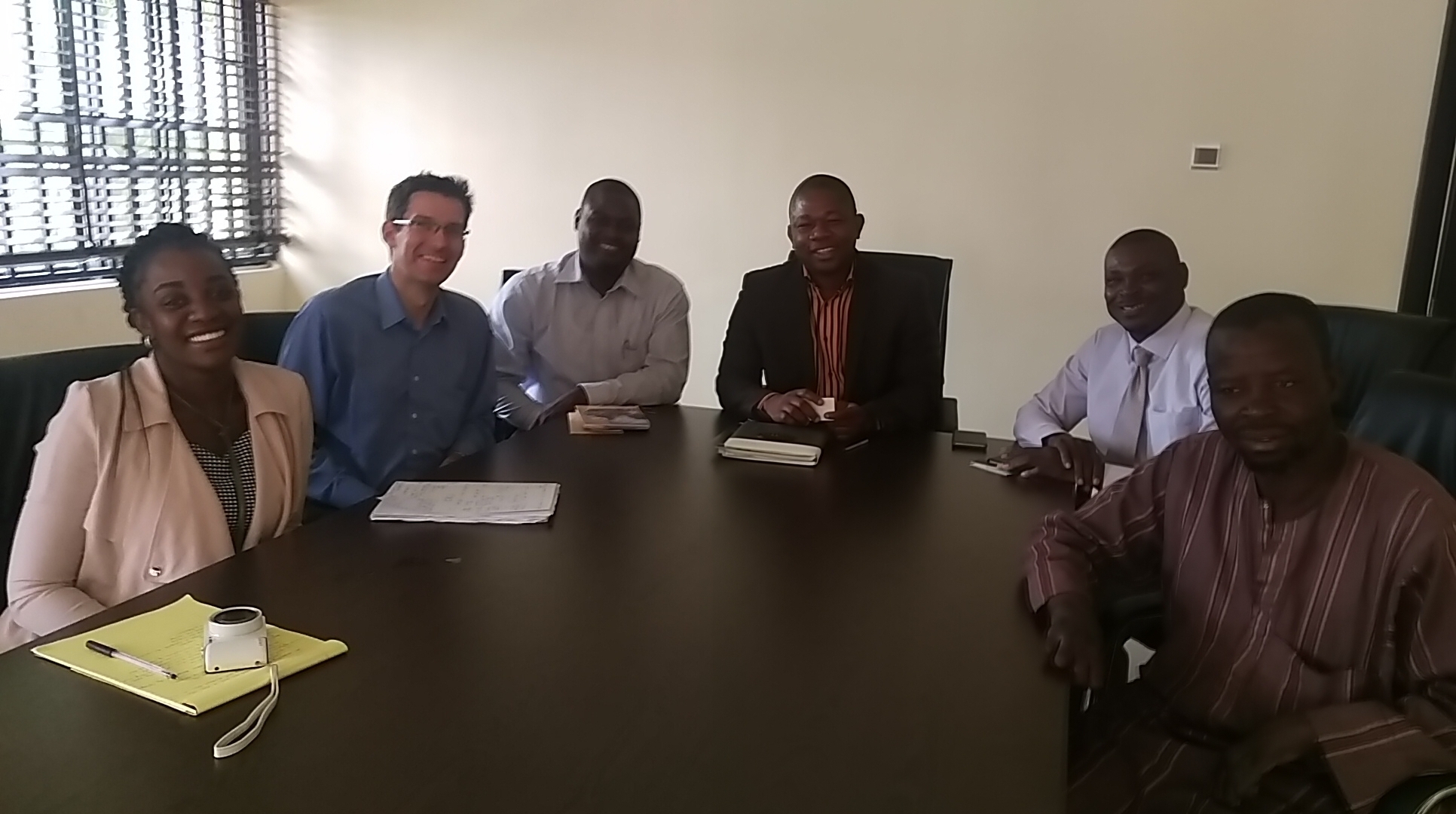
Yesterday, October 20th, Gede Foundation had a sit down with The Leprosy Mission Nigeria (TLMN). The meeting included Dr. Moses Onoh - Country Director of TLMN, Mr. Terver Anyor - Funds Development Manager, Mr.Gareth Shrubsole - Programme Officer, TLM (England and Wales), Aminu Ahmed, a survivor of leprosy, Mr. Godwin Etim - Performance Director: Resource Mobilisation and Partnership Management(Gede Foundation) and Mrs. Zunzika Thole - Okpo, Media Officer for Gede Foundation.

From L to R Zunzika Thole, Gareth Shrubsole, Terver Anyor, Godwin Etim, Moses Onoh and Aminu Ahmed

From L to R Zunzika Thole, Gareth Shrubsole, Terver Anyor, Godwin Etim, Moses Onoh and Aminu Ahmed

The team from TLMN talked about the stigma still surrounding leprosy and how they can increase awareness about the disease. They went further to discuss socioeconomic issues surrounding leprosy and their holistic approach towards treating it. In line with this, they sought some expertise from Gede Foundation on Mental Health. Dr. Moses, and rightly so, noted that empirically, the two organisations are doing the same job. He went on to say that the health burdens that the Foundation has undertaken are rife with stigma and so is leprosy. 

Sufferers of leprosy often face stigma and discrimination. Sometimes, they may even stigmatise themselves (keep themselves in seclusion so as not to be seen or pointed at). Mr. Shrubsole suggested that perhaps there could be a self care group where users can talk to each other about what they go through with their illness. Mr. Etim informed the meeting that some users that have been enrolled in the BasicNeeds project do have Self Help Groups. 

Going forward, perhaps Gede and Leprosy Mission can have a partnership that can try to bring leprosy ‘out of the shadows’. An integration of mental health into leprosy treatment will be closer to the holistic approach the Leprosy Mission uses in treatment and care of its patients. It will not only encompass the physical, but the mental as well.

Breaking Free: My Battle With Alcohol

‘My name is Don and I have been drinking since I was 15. I grew up around drinkers, I spent many hours of my childhood around brewers within my local community. I first tried a bottle of beer, then two and I craved to get drunk. I was curious about how it felt to be drunk. My first bad state was when I passed out in the detached bathroom outside the main house.

After my secondary school I got very mixed up with young men in my local community and we always ended every evening at a local bar. I started working as a menial mason and got very skilled but I spent most of my earnings on alcohol. Bit by bit I graduated from crates of beer to mixing beer and spirits/dry gin. I had a young woman, a good woman I wanted to spend my life with but I could not make enough money to keep her. At this time I needed to take up a job that paid more to be able to care for my woman and myself. Not being able to do this stressed me so much that I delved more into drinking and eventually the young woman left me. 

I felt my ego had been dented and I became violent and very aggressive. One day, I got physical with a fellow drinker at the local bar and was arrested and detained by the Police for three days. For the period I was detained, nobody came to see me, not family not friends. While in detention, I craved for a drink (I was thirsty for beer), it was as if I would not wake up the following day. This was the first time I had stayed off a bottle since I became addicted. When I was released my first stop was at the local bar and I had one bottle of beer on the house as a ‘welcome-back’. I got to my workplace next day, I was told by my Supervisor that my services were no longer needed for the obvious reasons – alcoholism and aggressive behaviour.

At that time I knew I needed help but did not know where to go to for help. I thought of going to the primary healthcare centre at the community council or seeing a Pastor or an exorcist. This was a very difficult moment of my life, I had no money, no job, and family wanted nothing to do with me and no friends. I calmed down a little, tried getting back with a brewer friend I had known from my childhood. He allowed me few shots for free and I would work with him to make just enough for a day’s meal. Over the few months I spent hanging around the local dry gin brewer I managed to cut intake. I was not eating well and I needed a stable mind to find a job, and energy to work. 

Today, I don’t drink every day. I can go for two days and just take few shots occasionally. I have a new job and another woman who is currently carrying my baby. Now, I want a normal life and want more control of myself. I want a good life for my child and my woman. I hope to find help to completely stop alcohol, I have stayed away from my old friends and my woman is very helpful. It’s very difficult but I am determined to stop. I hope I find what I need to help me long-term’.

A story of a young man form the hinterland who is fighting alcoholism. There is need for awareness raising on alcohol abuse and other non-communicable diseases such as mental health.

By Ekaette Udoekong.

GEDE AT THE ROYAL SOCIETY FOR THE ENCOURAGEMENT OF ARTS, MANUFACTURES AND COMMERCE (RSA)

Gede’s Managing Director, John Minto, attended an important “Mental Health Matters” meeting at the RSA in London on Thursday, 13th October, 2016. Key speakers included Lord Victor Adebowale (CEO of Turning Point (a major UK charity which offers services for those suffering from mental illness and learning difficulties), Sarah Brennan (CEO of Young Minds) and Jonny Brennan (mental health campaigner), who focused on the rising tide of mental illness within young people, largely within the context of high income countries where social media, bullying and a culture of high achievement in schools is producing a generation of youngsters bedevilled by issues such as stress, depression, substance abuse and, in extreme cases, suicide.

One of the key areas of interest for Gede was the discussion on why so many mental health agencies focus almost exclusively on treatment rather than on a balanced approach which would include prevention and stigma reduction. Speakers and members of the audience noted with some concern that Schools all around the world tend to focus on high academic attainment and physical health – without any recognition of mental stress which ‘School’ and teenage years in particular can bring. Calls for mental health to be incorporated into Schools (and this need not be expensive – simple early years lessons in ‘mindfulness’ have been shown to be highly effective) from the earliest ages were also supported with calls for ICT to also be engaged – any mental health initiative without a digital component is likely to fail for the vast majority of children and young people living in richer countries and as the internet makes its way across low and middle income countries, this tenet will almost certainly hold true.

Discussions also centred around the stigmatising nature of seeking mental health support, with a consideration of the Australian model which has ‘made fashionable’ mental health care and support for teenagers through their ‘Headspace’ programme. One key issue cannot be denied – without a consideration of positive mental health in young people, all societies are simply storing up expensive problems for the future.

The Case of the Destitute

He is about 50. He has no known family. He claims he is divorced. Efforts to locate his family have proved futile. For over 15 years there has been no known contact with a member of his family.

In 1999, a pastor found Mr. Edwin. He was in his 30s and was transporting people using his motorbike (okada). The pastor took keen interest in Mr.Edwin as not only was he one of the most regular church goers, he was also gifted in speaking in tongues. However, the speaking in tongues took a turn for the worst when Mr. Edwin could be seen and heard violently screaming in tongues and hitting the walls. Edwin’s then landlord decided to evict him as the disturbances were getting too much. The pastor narrated that Edwin’s prayers went beyond the norm. He noticed that Edwin would drive his motorcycle into the church and leave the keys in the ignition with the engine running. 

After Mr. Edwin was evicted, a church member took him in and employed him to start selling pure water. His condition further deteriorated as Edwin could be heard talking to himself, wandering aimlessly even though he was supposed to have been selling pure water. It got to a situation where he could hardly even take care of himself. The pastor and other church members looked once more for any family member, even as far as his village but none was found. 

In line with this year’s theme, ’Psychological and mental first aid for all’, the church community gathered together to help Edwin so as to ensure that he gets his life back on track, even though their means were not medical. It cannot be easy to assist someone you are not related to for over 15 years. During the Mental Health Camp held on 8th October in Mpape, Edwin was diagnosed with Schizophrenia. Through the partnership with BasicNeeds, of which Gede is a franchisee, Edwin will be able to have access to medication for the first time in fifteen years. It may take a while, as the case has gone untreated for some time but there is still a glimmer of hope for Edwin.