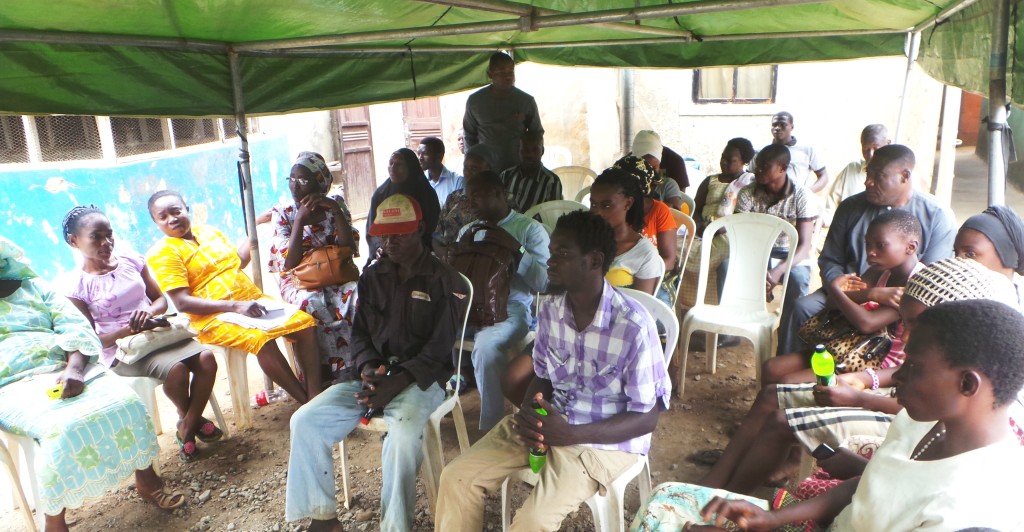
GEDE HOLDS ITS SECOND MENTAL HEALTH CAMP

He kept staring at me. No matter where I looked or what I did, he would not stop staring. I tried smiling but he kept a straight face and I was uncomfortable. And then he threw his head back and laughed. I’ll admit that I was a bit taken aback. Why was he laughing at me? Was it my hair? Was my shirt on backwards? Since I was frightened at this moment, I moved close to one of my colleagues at the Mental Health Camp. This set the tone for the MHC and I kept my distance for a while. 

However, as time went on, I remembered that he was less likely to get violent. I had seen similar cases at Gede’s first MHC. The only thing the man was doing was laughing. True, it made me uncomfortable but laughter doesn’t hurt. And so I laughed with him. 

The second Mental Health Camp which was held in Mpape was quite different from the one in Mararaba. We held this one at a Primary Health Care (PHC) Centre and as there was a lot of awareness created, a lot more people showed up than was expected. There were enrolments carried out right at the MHC as well as individuals that simply came to volunteer their services for free.

20160730_085757.JPG

We had a young man that has no less than five seizures a day. He couldn’t have been more than 8 years old. Another young lady presented with paranoia and delusions, although not completely unfounded. She had been previously shackled to a pole in a church and let loose on the day of the MHC. While at the MHC, she said she did not want to be in bondage anymore. She went on to say that everyone deserves freedom. She kept asking if she was a criminal and asked if the pastor was the police to chain her that way. After the session with the doctor, the young lady refused to go back to the church. She demanded to be left alone at the hospital instead of going back to being shackled. This brought on many thoughts. Was being shackled helping at all? True, she may not run off but was this helping her mental health? 

Another lady, a new mother, her baby barely a week old, ran away because she did not want to be associated with mental illnesses. 
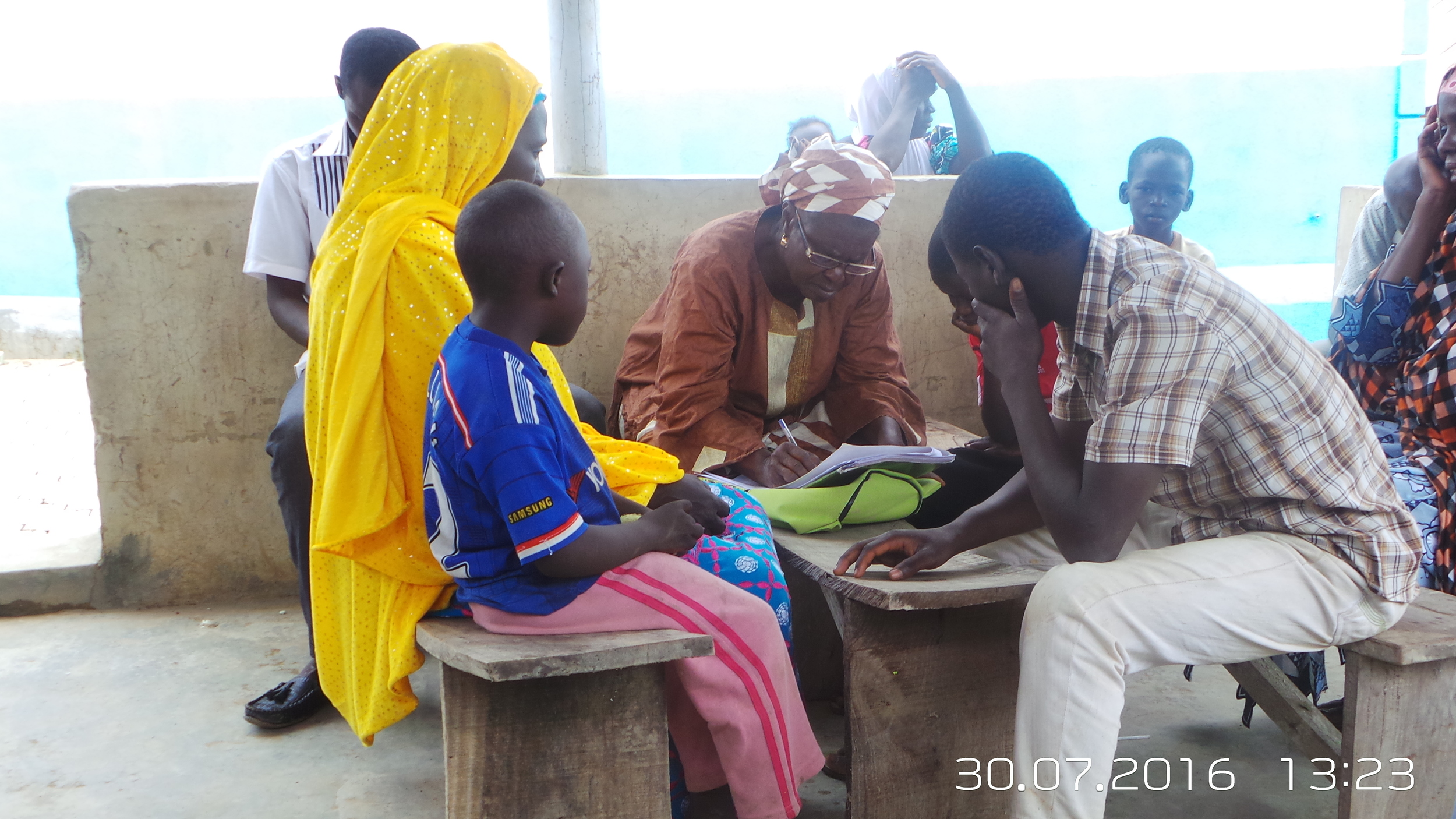
It is clear that stigma plays a big role in whether or not people living with mental illnesses and their families come out for medical intervention. There are many lessons learned from the two mental health camps and hopefully people will begin to understand that having something wrong with your mind or being epileptic is nothing to be ashamed of.

The next round of MHC's will be held in Mpape and Mararaba at the end of August. 

Zunzika Thole

Road Rage, Deplorable Roads and Traffic Stress

Road rage is a collection of aggressive behaviours by the driver of a vehicle, which is beyond the perceived offence committed. These behaviours range from shouting, screaming, yelling, and using objects such as belts, ‘koboko’, which could hurt the victim and/or damage their vehicle. They are behaviours that occur in response to a perceived unfair provocation while driving. These behaviours could be habitual such as reckless driving (tail gaiting, snail/speed driving) or situational such as encountering potholes and detours with no warning, 

The hinterlands, where most activities of Gede Foundation Calabar take place, is miles away from the metropolis and each trip on this route is a story of its own. I have experienced road rage from motorists, “area boys” (group of young men) that extort money from commercial drivers under the disguise of helping to control traffic and even passengers who are also stressed travellers such as myself. 

One of the roads to the hinterlands

One of the roads to the hinterlands

Very often, the road safety enforcement agencies report on accidents due to deplorable roads and careless driving with no recognition given to underlining mental impact of the bad road, long lines of vehicles, traffic jams and extortions on the driver and passengers. There is a need to consider mental health awareness on the impact of stress caused by bad roads, extortions and detours, tailgating another vehicle on drivers especially commercial and long distance drivers.

While anyone can feel rage, some people have been known to get violent while driving. There is a story of a young pregnant woman who got out of her car and shot someone with a stun gun. The amount of anger one is feeling to do such a thing must be intense. A person’s emotions can be triggered by what they think or feel another driver is doing and they may take offence. Could it be that this ignored stressor is actually the main cause of the displaced aggression during driving? According to WebMD, with road rage, you are under the influence of impaired emotions and this can affect your work and relationships as well as your driving. It is therefore an important aspect of mental health that needs addressing. 

Ekaette  Udoekong


Gede Foundation Holds First Mental Health Camp

A very smart young man with a good job has a severe addiction to what he calls “certain drugs”. Even as I am talking to him, he tells me he does not have the willpower to desist from it. He tells me when he is tense, he believes that is the only way he can relax and be able to feel confident. He’s been doing this for over 5 years but he knows it is not good for him and he is ready to stop. He tells me he needs a ladder to help him out of the ditch he is in. His addiction, he says, has strained his relationships with his family, school as well as the community. They look at him as one of the bad guys in the community.


This was only one of the stories we heard yesterday at the Mental Health Camp (MHC) that Gede Foundation conducted at Chief Allahyayi Gambo’s palace in Mararaba. A considerable number of people came to the palace to get diagnosed by our psychiatrist, Dr. Omoyemi Osuhor. There were cases of psychosis, epilepsy as well as substance abuse. Most of the users (and carers for those that cannot take care of themselves) claimed that they do not have access to any medical intervention. They instead saw either traditional healers or faith healers. A few of the participants claimed to have become a little better after treatment but more often than not, they relapsed. The MHC was an eye opener not only to the number of sufferers in communities, but also to the types of treatment they have access to and how they respond to side effects. For instance, a lady aged 23 had a psychotic break in 2013. Her parents took her to the hospital where she received treatment and started getting better. However, she did not finish her medication as she claimed the medicine made her gain weight. Shortly after that, she fell sick again and sadly, was taken advantage of by some men. Up to now, she prefers sticking to traditional medication as this does not make her “fat”. Another lady narrated her son’s story. Her son was born 18 years ago and apart from minor complications at birth, everything else was OK. Her son progressed as well as any other child would; he crawled, teethed and walked on time. The parents became concerned when he was 3 and could not talk. They took him to the hospital and they found nothing wrong. Therefore, for over 12 years the young man has only seen traditional and faith healers. According to his mother, the young man cannot reason or speak well. He is usually on his own, mumbling to himself. The MHC was the first time he has seen a psychiatrist.

The Foundation is very grateful to the Chief of Mararaba for being kind enough to allow the Mental Health Camp to hold at his palace. The Chief was happy that Gede Foundation kept to its promise of actually doing something in his community. This is very promising as partnerships such as this one are an advantage in the community and they help in not only reaching more people but cementing faith NGO’s. 

This is the first in the series of MHC’s the Foundation will hold. The next one will be on Saturday, 30th July 2016 in Mpape at the Primary Health Centre (PHC). The opportunity to work with and help those living with mental illnesses and epilepsy is a passionate one for Gede as it is our goal to not only ensure they have access to the right treatment, but that they get back on their feet and are able to positively contribute to their communities. Furthermore, this opportunity allows for others who can help to assist the Foundation to reach more people.

Mental Health Camp!!!

Gede held its first ever Mental Health Camp yesterday at the chief's palace in Mararaba!!! 

Below are a few pictures of the event. 

Please check back later for more details. 

The Gede – Lafarge Africa Plc (UniCem) Tertiary Scholarship Programme

Three years ago, Gede Foundation’s Calabar Office was contracted by Lafarge Africa Plc (UniCem - United Cement) to manage its scholarship programme. The contract entailed paying yearly bursaries (which are provided by UniCem) to selected tertiary students from communities where UniCem operates. Over these three years, Gede was charged with mobilizing, mentoring, assessing academic performances of all awardees (both in secondary and tertiary institutions) and feeding back to both awardees’ communities and UniCem. In the first two years, over 20 tertiary and 130 secondary students were awarded bursaries (including books and fees/levies). 

The scholarship programme also included Community Health Outreach(CHO)  which is a special communityprogramme designed by Gede Foundation to involve the tertiary beneficiaries to reach out to young children within their communities with information on drugs and substance abuse, sanitation and life basic skills. One of the pioneer tertiary beneficiaries who has graduated and is currently engaged by STRINGS LTD to work with Lafagre Africa Plc (UniCem) shares his success story- 

Believe Francis

Believe Francis

“My name is Believe Francis. I hail from Abiati village, one of the ten communities where Lafarge Africa Plc operates from in Akampa Local Government Area. I am a graduate of Economics from the University of Calabar, Calabar. The scholarship award was a big assistance and financial relief to me and my family as we had faced a number of challenges. I was very focused on my education but there were financial burdens. Therefore, the scholarship programme really relieved the burden that was upon my family.

Interestingly, the scholarship programme is teaching me me how to “give back” and this has been made easy through the community health outreaches and the mentorship from Gede Foundation. I am learning life skills, responsibility and time management. I am also learning how to be an innovative thinker and this has helped me in my current work with the company, I am very grateful to UniCem and Gede Foundation for their support” 

The number of Scholarship recipients for 2015/2016 is 20 and they will be involved in community health outreach. 

Scholarship recipients

Scholarship recipients

Watch out as events unfold with the new set of awardees.

Gede Research Assistants & Catholic Relief Services/SMILE Team Trained

As our regular readers will already know, Gede Foundation signed a 6 month research contract with Catholic Relief Services (CRS) Nigeria/ Sustainable Mechanisms for Improved Livelihoods and Household Empowerment (SMILE) project in May 2016. The contract is focused on delivering an approach to community based detection, treatment and referral services for vulnerable children with mental health and psychosocial problems and their caregivers. Pending the beginning of the research, Gede Foundation and CRS held a 7-day training which ran from the 15th to the 23rd of June 2016.

The training was conducted by the Principal Investigator to the project, Dr. Bonnie Kaiser who is a post-doctoral fellow at Duke University. She has vast experience in research and conducts global mental health research with a focus on cultural aspects of measurement, communication and intervention design. The training participants included four research assistants and two members from CRS/SMILE. 

The training was both highly technical and extremely interactive. Topics covered include Research Basis, Introduction to Mental health and Resilience, Introduction to Qualitative and Quantitative Research, Ethics, Interviewing Practice, Focus Group Discussions and Survey Data Collection. After each topic, the participants had practice questions or interviewed some volunteers from Gede Foundation. 

To test their overall readiness, participants were introduced to Focus Group Discussions with children from Mpape, one of the SMILE communities in the Federal Capital Territory. The FGDs went well and gave the participants a feel of what lies ahead of them. 

The research will commence in 2 weeks and will run for 6 months. It is our belief that this project is groundbreaking in the area of mental health among children and that it will help scores of children and caregivers to be more open and resilient, as well as helping the children to grow into mentally sound adults.

Advanced Research Skills for Health and Development

  • Access to internationally renowned Faculty members (including Professor Martin Prince and Dr Rosie Mayston from King’s College London, Dr C O Anazonwu, Professor Gloria Njoku, Professor Helen Osinowo, Professor Andrew Zamani from the Nigerian Psychological Association) 
  • In depth and personalised training
  • Access to online materials and follow up support from Faculty
  • A curriculum which will cover topics such as - how to generate research questions; operational research; how to read a research paper; interpreting evidence; proposal writing; research methodologies; quantitative and qualitative study design; longitudinal studies; research ethics; data analysis; dissemination for achieving impact
  • A Certificate of Attendance

GEDE SIGNS A 6 MONTH RESEARCH CONTRACT WITH CRS Nigeria

Gede Foundation has been working to uphold the welfare of Nigerian children for more than a decade now through its education and skills acquisition projects.  We are happy to announce that Gede has just signed a research contract with Catholic Relief Services (CRS) in Nigeria to broaden its support for Nigerian children.

CRS has awarded Gede Foundation a research grant in Developing an Approach To Community-Based Detection, Treatment and Referral Services for Vulnerable Children with Mental Health and Psychosocial Problems and their Caregivers. The grant is under the USAID funded Sustainable Mechanism for Improving Livelihood and Household Empowerment in Nigeria (SMILE) project and will last for 6 months.  

The purpose of the research is to develop and validate locally appropriate screening tools for mental health conditions in order to inform an intervention aimed at reducing the impact of mental health conditions among vulnerable children served by the SMILE project. Recent research from Ghana has shown that the psychosocial support given to OVC needs to be tailored to their specific mental health challenges which, in turn, need to be screened in ways which are appropriate to their circumstances.

Gede Foundation and CRS hope that this research project will serve as catalyst in the delivery of appropriate mental health services to children in Nigeria, for we believe that mentally healthy children will eventually grow into generally healthy and sound leaders of the country. 

Gede Foundation makes great strides as first Nigerian social franchisee

The following article appeared on BasicNeeds Uk website

In the three months since the Gede Foundation joined the BasicNeeds ‘family’ as a social franchisee they have made great progress, meeting and inspiring many local stakeholders including the Nigerian Minister of Health!

In Mpape and Mararaba, the two communities in which Gede is piloting the implementation of the BasicNeeds Model, highly successful introduction meeting with the local Chiefs have taken place, and ten passionate community-based volunteers recruited and trained. Consultation meetings have also been held – in order to listen to, and understand the experiences, needs and aspirations of people living with mental illness and epilepsy, ensuring the project design and implementation is built on, and led by the voice of affected people.

The initiative has also been endorsed and supported by many local stakeholders; churches, mosques and self-help groups have all made announcements to their members to raise awareness of the project.  Most notably, the Honourable Minister of Health, Professor Isaac F. Adewole has expressed his support for the project, and asked to be informed of further developments, thus opening the door for further conversations with policy and decision makers.

The fantastic support from the community indicates that the Gede Foundation is likely to make a significant contribution to the lives of many people living with mental illness in Nigeria.

Family Environment And The Child’s Social and Emotional Behaviour

Several factors affect the way children express their social skills and emotional strength. One such factor is the unsupportive and aggressive relationship between parents and children (especially foster parents). It is not news in this part of the country that street children (nicknamed Skolombo) are a serious security threat. These are children rejected by family because they are branded “witches and wizards” or have absconded from home because they committed offences and have bonded themselves into gangs.

I met with one and chatted. His real name is Daniel and he hails from Abak Local Government Area of Akwa Ibom State. His street name is “Udord” meaning Slime.  I usually see Daniel in the morning picking out empty plastic bottles from the dust bin as I dispose of refuse. He would greet me and ask for plastic bottles; he is friendly but scavenges alone unlike others that are in pairs or groups of more. 

One day, we exchanged greetings but I didn’t leave immediately, so he asked slowly in pidgin ‘Mumsy, you wan send me, abi you get job for me? I smiled at him and answered “I wan ask you something” ‘Ok’ he said and this is how our chat went in Ibibio.

Me: What is your name and where are you from? My name is Eka
Daniel: ‘Udord’, from Abak.
Me: Udord? What does that mean? It is not a popular Ibibio name.
Daniel: (Chuckled) My real name is Daniel ‘Udord” is my nickname.
Me: Why are you called so?
Daniel: (He laughed) Mumsy I don’t know may be I am slime or I make people slip. I don’t know.
Me:  How should I address you Daniel or Udord?
Daniel: Mumsy call me what makes you comfortable.
Me: OK I will call you “Udord”. So Udord, I see you collect empty plastic bottle but you don’t look like other scavengers. What do you do with the plastic bottles?
Daniel:  I sell the plastic bottle to market women
Me: How much do you make on average daily from the sales?
Daniel: On a good day I make up to N700, sometime I get as low as N300.

We talked for a few more minutes but I could not stand the stench from the dustbin so I asked him whether I could buy him breakfast. With delight, he said “Yes!”  We walked a few steps from the dustbin and he stacked his sacks of plastic containers and bottles under a tree.

At the “buka” we talked about recycling plastic and scrap metal. I was moved by his intelligence and confidence, I asked, “Daniel, how did you get to be on the street?” His face dropped and it seemed I had asked a difficult question. He drank some water, thanked me and got up slowly. I apologised for overstepping and thanked him for the time we had to talk. I started to walk away and he called, “Mumsy may be one day you may wish to help me get back to school”.

Daniel is 19 years old and has lost both parents. A relative took him in and not only refused to take him to school, but made him do hard chores including hawking wares. Depressed by the family maltreatment, he ran from home (Akwa Ibom State) in 2014 to Calabar with the hope of getting a job but ended up as a scavenger. He refused to bond with other street children for fear of being roped into crimes and so prefers to be alone. He sweeps bus stations sometimes and sleeps in buses or in abandoned cars in garages. His refusal to be like other street boys earned him the nickname “Slime”. His sad story went on.

Daniel with his cart, being offered empty cans.

Daniel with his cart, being offered empty cans.

Maybe Slime did not tell the whole truth as to why he is on the street but family abuse, neglect and abandonment clearly affects a child’s behaviour. I do not think all street children are gang members or criminals but that bad family environment creates substantial risk to the physical and mental health of a child evidenced by emotional damage, severe anxiety, withdrawal or aggressive behaviour. There is need for a wide spread awareness not only on child’s rights, but also supportive family relationship for healthy mental development of the child.

Ekaette Udo Ekong