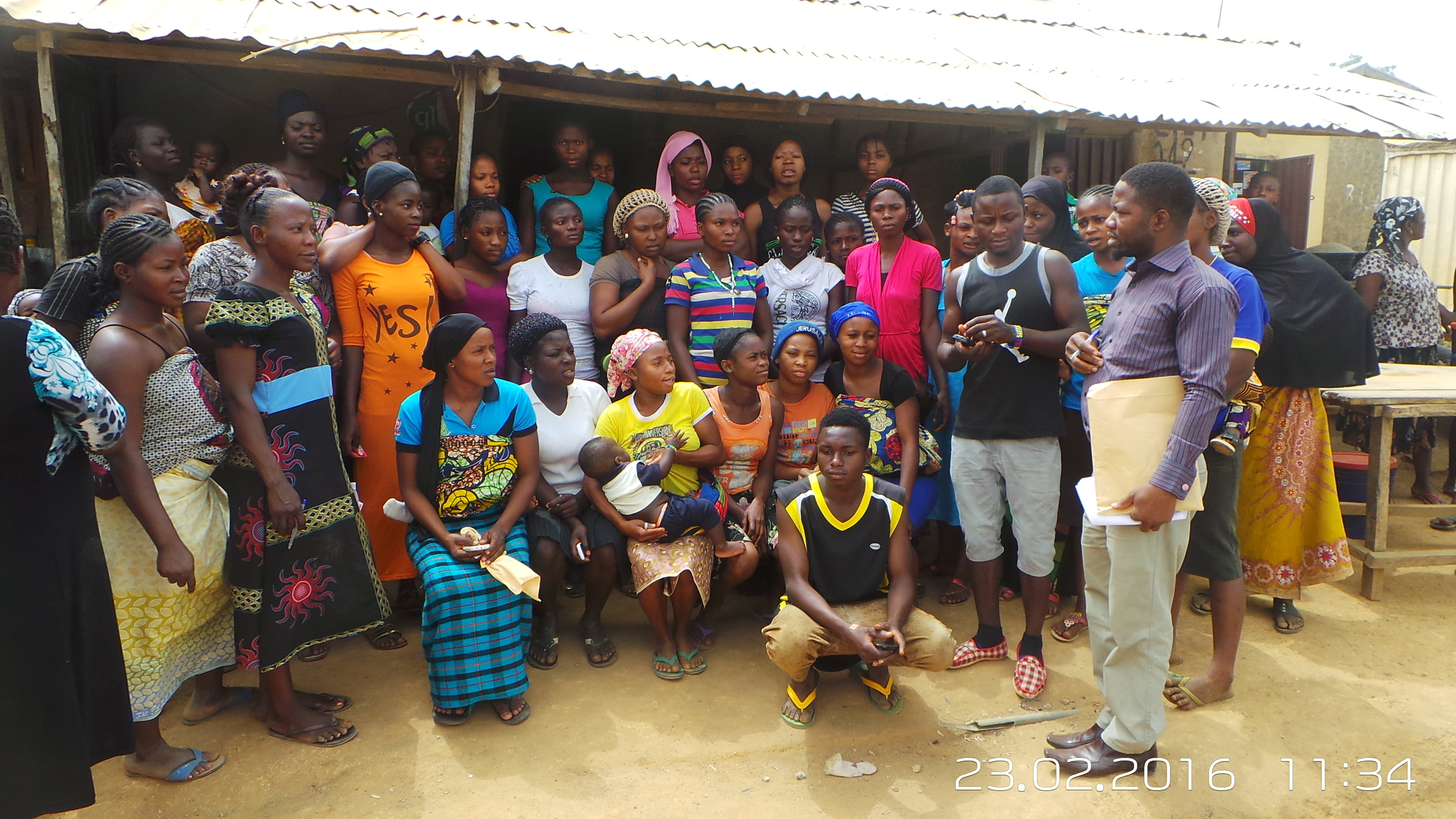
Gede and CCM explore the impact of Mental Health on other Disease Burdens

The meeting between Gede’s Managing Director, Mr John Minto and the Chairman of Nigeria’s Country Coordinating Mechanism, Dr Dauda Suleiman, explored ways in which the two organizations can continue to support the national response to disease burden. The Global Fund grants are coordinated through the CCM and are framed by the specific country context in which they are written.

20160310_103910.JPG

 The disease burden of HIV-AIDS, TB and Malaria are relatively well known and recognised. What is less recognised and understood is the link between, for example, common mental disorders and new HIV infections, as well as adherence to HIV medication.

Gede and CCM acknowledge the significance of mental health, especially, in care outcomes for people living with HIV-AIDS and the impacts on treatment cost.

A communication loop as been established to circulate relevant information among the two organizations (including Gede’s Prevalence Study Report on Depression, Alcohol Abuse and Suicidality) among 1000 people living with HIV-AIDS in the FCT to CCM members and also to advocate for inclusion of mental health services across board.


WOMEN AND MENTAL HEALTH

The World Health Organization talks about issues related to gender disparities and mental health in its publication (http://www.who.int/mental_health/prevention/genderwomen/en/) stressing that “overall rates of psychiatric disorder are almost identical for men and women but striking gender differences are found in the patterns of mental illness”.  In summary, it cites that women are two times more likely than men to develop certain mental health conditions like depression, eating disorders, and panic disorders.

Women are also two to three times more likely to attempt suicide, although four times more men die from suicide.  Symptoms can also differ between men and women, so it’s important to understand the different factors that can contribute to each illness. For example, females tend to report more physical symptoms in relation to mental illness. These can include fatigue, loss of appetite, restlessness, nausea, and headaches (www.dualdiagnosis.org). 

Today, March 8th, as we celebrate International Women’s Day, we at Gede Foundation invite you to join us as we raise awareness on mental health as they relate to various cohorts and marginalized populations in our society, especially women.   

Gede observed Country Coordinating Mechanism’s meeting of the Global Fund

The new funding model is based on allocations. In the current cycle covering 2014-2016, eligible countries including Nigeria received an upfront allocation, which provided improved predictability of funding.

The Country Coordinating Mechanism (CCM) in Nigeria is mandated to facilitate all Global Fund Grants disbursement in-country and supervise selections of principal and sub recipients.

Starting from the Country’s national strategic plan, stakeholders including Gede Foundation (as observer at the meeting) participated in an ongoing country dialogue and review of outstanding issues related to the process of selecting implementers on March 2 2016. Development partners, donors and grant recipients anticipated an all-inclusive engagement of key players within the three disease burdens. Gede’s involvement with the activities of CCM is to add values   to the meeting outcomes, and to offer its contributions regarding the links between mental health and HIV-AIDS, which is noted in the prevalence study undertaken by Gede in 2015-2016 and sees the CCM as an important channel for advocacy work for the integration.

Check this site to share with the result of the study later in the year.


Demand versus Supply- Unending Vulnerability

The number of orphans and vulnerable children (OVC) in Nigeria is estimated at 17.5 million, out of which 7.3 million are orphaned by HIV-AIDS, most especially (and understandably) in those States which have recorded high prevalence rates. For children living outside the care of biological parents, the situation is assumed to be the most overwhelming, particularly, in low income countries. Neglect, discrimination and malnutrition affect orphans more commonly than their non-orphaned peers.

The Addax Oryx Foundation programme run by Gede is addressing some of these needs by reaching out to impoverished households in rural communities to lay foundations for a productive future for orphans. Thousands of orphans have been re-enrolled into secondary and vocational schools, provided with nutritional support and empowered to start their businesses. In the midst of this, there are still huge gaps in terms of limited resources to match with the demand.

Due to the overwhelming demand for services to orphans and vulnerable children in rural communities, there is need to revert to guidance from tools such as the Child Vulnerability Index Enrollment Card in order to pick the most vulnerable cases due to limited resources. The enrollment exercise for 2016 is ongoing in twelve communities in the FCT and within few weeks, other activities will follow. We are using this medium to thank our past and present donors, for investing into the future of this vulnerable population and, reaching out to as many as would want to address the plight of orphans in Nigeria. You can contact Godwin Etim via godwin@gedefoundation.org for more information.

STRESS- THE UNENDING BATTLE IN THE MIND

You may feel there’s nothing you can do about stress. The bills won’t stop coming, there are never enough hours in the day, and your work and family responsibilities will always be demanding. But you have more control over stress than you might think. Stress management is all about taking charge of your lifestyle, thoughts, emotions, and the way you deal with problems – problems, by the way, which we all face on a daily basis. No matter how stressful your life seems, there are steps you can take to relieve the pressure and regain control.

Research from around the world indicates that the modern work environment can expose employees to potential risks (sometimes unnoticed), which can cause serious, though often slow burning, negative impact on both employee and employer. At the end, stress is linked to workplace productivity outcomes and should be considered as a factor in setting up workplace policies. As more is known about stress in the workplace, there is an increasing need to ensure that programmes to address the impact of stress are focused on ‘site specific’ issues-general programmes which have tended to focus on time management and /or a general overview of stress have their uses, but more focused site specific actions are needed.

The sources of stress in one’s life and occupation may differ and as such, Gede Foundation’s “Managing Stress in Workplace Programme’’ targets specific workplace stressors and address them with full engagement  of both employees and employers. You can reach out to Godwin Etim via godwin@gedefoundation.org  to address stress as it relates to your workplace.


The Mind-Body Connection

As Gede Foundation’s Management of Stress in the Workplace Programme is about to take off, we would like to share with you this relevant excerpt about how ailments can be directly attributed to stress and other negative emotions.    

It’s interesting to note that certain emotions are known to be associated with pain in certain regions of your body, even though science cannot give an explanation for why. For example, those suffering from depression will often experience chest pains, even when there’s nothing physically wrong with their heart.

Extreme grief (or any other extremely stressful event) can also have a devastating impact—not for nothing is the saying that someone “died from a broken heart.” In the days after losing a loved one, your risk of suffering a heart attack shoots up by 21 times!

While the mechanics of these mind-body links are still being unraveled, what is known is that your brain, and consequently, your thoughts and emotions, do play a role in your experience of physical pain, and can play a significant role in the development of chronic disease.

For example, previous studies have linked stress to lowered immune system function, increased blood pressure and cholesterol levels, and altered brain chemistry, blood sugar levels, and hormonal balance. It has also been found to increase the rate at which tumors grow. One of the reasons for this has to do with the way the biological stress response promotes inflammation in your body.

When you're stressed, your body releases stress hormones like cortisol, which prepare your body to fight or flee the stressful event. Your heart rate increases, your lungs take in more oxygen, your blood flow increases, and parts of your immune system become temporarily suppressed, which reduces your inflammatory response to pathogens and other foreign invaders.

When stress becomes chronic, your immune system becomes increasingly desensitized to cortisol, and since inflammation is partly regulated by this hormone, this decreased sensitivity heightens the inflammatory response and allows inflammation to run rampant. While it’s not possible to eliminate stress entirely, you can help your body to compensate for the bioelectrical short-circuiting caused by emotional stress.

See the full article from this source: http://articles.mercola.com/sites/articles/archive/2014/01/30/eft-mapping-emotions.aspx?x_cid=20160210_ranart_eft-mapping-emotions_facebookdoc


Parenting behavior and children’s mental health

 As I interact more frequently with Principals, Teachers, School’s Counselors, Parents and Children in the UNICEM – Gede Foundation educational support programme currently going on in 10 communities of Cross River State. I would say that there is a strong relationship between weak parenting and onset of drugs and alcohol use among young Children.

IMG_20160205_083549.jpg

 In one of the community schools, a child was reported to have taken to school a bottle of alumo (an alcohol beverage) and bragged to his friends on how much quantity he can take and still maintain his calm. On a one –and-one conversation, it became clear that he had no parental caution:

Me: Why did you bring alumo to school?

Student: Madam, nothing (with his face downward)

Me: How old are you?

Student: 12 years old

Me: Who buys alumo in your house?

Student: My father and my Uncle.

Me: Who goes to the shop to buy alumo for your Father and Uncle?

Student: Myself or my Brother or my Sister

Me:  Does your Mother know that you drink alumo?

Student: She is my step Mother, she use to see my Uncle give us the remaining from his bottle, but it is usually small quantity…

Me: Apart from alumo which other “drink” have you taken?

Student: Ufofop (locally brewed dry gin)

Me: How and where did you get a drink - ufofop?

Student: In the house, my Father use to prepare it... but he is not doing it again.

Me: When you take ufofop or even alumo nobody tells you that it is bad for your health?…

Student: No

Me: When was the first time you ever took ufofop?

Student: When I was small, I cannot remember.

Me: You are now in Junior Secondary Class 1, maybe it is when you were in your primary school level? What class, can you remember?

Student: like in my primary 5

Me: How did you get this bottle of alumo that you brought to school?

Student: (long silence)

 This conversation went on for more than 30 minutes and I could spot information gap on effects of drugs and alcohol abuse and poor parenting as being influencing factors to the onset of alcohol use in this 11 year old. Parents have enormous influence in shaping the personality and behavior of their children, when there is a short falls in this responsibility of providing supportive environment and role modeling healthy behavior for their children, it leaves a huge task on the part of the teachers who most times may not be able to provide the necessary safety nets for children within school hours.


Ekaette Udoekong

Zonal Representative

Cross River State


MENTAL HEALTH AND ECONOMIC VULNERABILITY

During the course of my work with orphans and vulnerable children (OVC), I have come to realise that some orphans are more vulnerable than others. In particular, those suffering from mental health challenges face the twin problems of stigma and marginalisation and need careful 'handling'. I can give one example. I met Ladi Bako, one of Gede's OVC beneficiaries who lost her parents due to an attack by Boko Haram. One can only imagine the trauma she has experienced through losing her parents in such a violent way. It is not surprising that Ladi herself is now suffering from both trauma and depression. in turn, this has meant that it has been difficult to concentrate and to focus on her income generating work in particular - and has shown me how close mental health is to economic vulnerability for so many OVC living in Nigeria

John Adakolo

THE ART OF MORAL PROTEST


There can be little doubt that, at the current time, one of the key objectives of many agencies working within mental health is to ‘prove the case’ largely in terms of, (i) prevalence and impact, and, (ii) developing ways in which mental health screening, treatment and referral skills can be integrated into existing health platforms. While these objectives are absolutely worthy and essential (and might also result in insights into other non communicable diseases in particular), there are increasing calls to ensure that ‘the voices’ of those suffering from (and affected by) mental health conditions do not get lost in the research and policy evolution ‘din’. Indeed, it is difficult to see how any real progress can be made either in research and/or policy formulation without their voices being ‘front and centre’ – as they have been within HIV-AIDS.

This opens up a sometimes uncomfortable debate within NGOs regarding the use of ‘shock tactics’ to gain the attention of the reading public and decision makers. How long will it be until mental health user groups emerge which espouse a radical agenda, forcing the policy and resource allocation ‘debate’ to pay attention to them through their ability to shock their audience into ‘submission’? Reflecting on the lessons from HIV-AIDS support groups, is this inevitable and, indeed, even desirable for the longer term benefit of users? At what point will mental health support groups morph into protest movements and demand equal rights to health for all of their members? Is there even any case from around the world in which ‘rights’ have been won without a ‘fight’ involving the ability to shock decision makers in particular into action? If not, what does this say for the rights of people living with and affected by mental health in Nigeria?

A CRISIS OF HOPE

Today’s world has seen the unthinkable and done the unimaginable. With records in all fields of endeavour, it remains a mystery how the conquest of the ‘outer world’ is hardly reflected in realities of the ‘inner world’. It appears as though the further man ‘goes out’ to master his exterior situation the further he gets from mastering his internal condition.

This truth is best observed in the world of mental health disorders. Among the common mental disorders, the incidence of depression stands out and often time progresses into other conditions such as alcohol abuse and suicidality. One thing seems common to all forms and expressions of depression: the strong sense of hopelessness. With a growing incidence of depression the world over, it seems safe to say the world is progressively being confronted by a crisis of hope.

It was Orison Swett Marden who once said: ‘There is no medicine like hope, no incentive so great, and no tonic so powerful as an expectation of something tomorrow’. Today, more than ever before, hope is the most valuable commodity that is important to one as it is to all. At Gede(interestingly ‘Gede’ stands for hope in Fulani), bringing hope to those who need it the most is a priority, and with present endeavours for addressing mental health challenges among people living with HIV/AIDS, I think I feel really proud to be curbing, with Gede Foundation, one of today’s major crisis of hope in my dear country, Nigeria.

By Ebhohimen Kizito