GEDE’S HIV PREVENTION PROJECT IN OYO STATE- HAF 2 GRANT


A 2-year support initiative from the World Bank through OYO SACA was aimed at tackling the incidence rate of HIV infection in rural communities in Oyo State from January 2014 to December 2015. Gede Foundation in Ibadan, Oyo State, implemented HIV prevention programmes using the Minimum Prevention Package Intervention (MPPI) modules in two Local Government Areas. In reaching 3000 adults with HIV prevention activities such as peer education sessions, condom distribution and referral services outlets, and a number of lessons were learnt-

Project Management Training

It wasn’t enough to roll out the grant to ‘qualified’ organizations; rather, routine capacity building meetings to implementers yielded the needed results. I was involved in several CSO meetings with OYO SACA, NACA and other relevant stakeholders to ensure that data from the field are properly processed.

Peer Educators’ Sessions

It was a significant experience to have adults (Men and Women) participating in community dialogues during the sessions, and, those infected with the virus were not stigmatized but supported. Although stigma is yet to be eradicated, a reasonable family care and support still exists within many community settings. Participants were always eager to receive more IEC materials provided in the project


Buy-in and Sustainability

The project started with initial challenges in getting people toparticipate in community activities, especially, during the day as adults were always seen attending to their farm and other businesses’ needs. The sudden twist regarding meeting times encouraged full participation. It was also obvious that when beneficiaries are not involved from the project design, it is difficult to succeed in the sustainability plan.

I am hoping to see that the incidence rate is positively affected through this programme as we hope to sustain the initiative from other subsequent opportunities.

Peter Oshademi

Zonal Representative- South West


PRESS CONFERENCE- ENDING AIDS IN 2030


It is no longer news that international funding and support to fight HIV-AIDS, TB and Malaria in Nigeria is dwindling. Recently, in-country advocacy, mainly to government agencies is understandably intensified in order to stimulate internal mechanism to provide the necessary support to those infected with the virus. In Nigeria, about 3.4million people are infected with HIV and less than a quarter of that could access treatment (even with external donor support).

20160107_105723.JPG

In a press conference, participants including members of Civil Society Organizations, Donor Agencies, Government Agencies and the  Media acknowledged the gains recorded over the years, which were driven mainly by external support  from   PEPFAR, Global Funds, DFID and UNAIDS and also cautioned on the need to explore internal mechanism  to ensure a sustainable treatment programmes for Nigerians.

The National Coordinator for network of People Living with HIV-AIDS in Nigeria, Victor Omosehin highlighted various challenges faced by those in need of drugs (including user fees), in health facilities and noted the dangers that might evolve as a result of these constraints.

Participants agreed that unless internal support is harnessed, especially in local production of antiretroviral drugs and other health insurance benefits including ART for those on treatment, the psychosocial burden on People Living with HIV-AIDS will create another treatment gap in patients’ care.


HAPPY NEW YEAR

As regular readers of Gede blogs will know, the Foundation exists to bring underserved and stigmatised health burdens ‘out of the shadows’ through high quality research, catalytic partnerships and advocacy initiatives, all of which make a real difference at the community level. Building on our work over the last two years in particular, 2016 promises to be an exceptionally busy and rewarding year for Gede and will focus on –

- The publication and widespread dissemination of our 2015 Prevalence Study of common mental disorders in a sample of 1200 people living with HIV-AIDS in Abuja, Nigeria. This Study – one of the largest ever undertaken in Africa – has generated a great deal of attention from the development, mental health and HIV-AIDS communities and the final Report will be posted on the website

- The cultural validation of mental health screening tools for the benefit of those living with, and affected by, HIV-AIDS (including orphans and vulnerable children). Gede will work with leading partners to ensure that tools used for the screening, treatment and referral of key mental health conditions will be linguistically and culturally appropriate to those engaged by them which will help to limit mis-diagnosis and generate increasing levels of mental health awareness


- Working with our partners, NEPWHAN among others to ensure that mental health screening, treatment and referral skills are integrated into HIV-AIDS care and support platforms in ways which strengthen the role of Support Groups in mental health stigma reduction and general awareness raising

The Foundation will also be involved in other important activities such as supporting the work of the CSO Coalition on Mental Health; publishing Nigeria’s first Mental Health Directory; evolving our highly successful Mental Health Dialogue Programme; delivering our innovative Managing Stress in the Workplace Programme to a range of clients.

So, a busy year ahead! Please do return to our website regularly and remember – there is no health without mental health.

John Minto, Managing Director, Gede Foundation


Where is the dignity in mental health?

Originally published in Business Day by John Minto & Jennifer Douglas-Abubakar

For most reasonable people, the right of anyone suffering from an illness to be treated in a clinically appropriate and respectful manner is so obviously true and morally correct that it is baffling to think that the position has to be defended for any medical condition. However, in the case of those suffering from mental illness, there is little doubt that few are able to access their right to appropriate care. The commemoration of World Mental Health Day on October 10 offers us an appropriate moment to reflect and ask, 'why?'

Download full article >

Successful end to Mental Health Dialogue 2015

The Gede Foundation Mental Health Dialogue Programme for year 2015 ended on a very pleasant note on Wednesday 16th December, when stakeholders, partners and other attendees got together in an informal gathering where there was a lot to eat and drink. Prior to the get together, there was a run through to summarize events and presentations which took place earlier in the year.

For some participants, there were one or two must mention topics which were further discussed.  One or two participants expressed their views that Gede had done very well in the outgoing year but hoped that the programme had reached a more mature stage where it should be taken to a bigger venue that would attract more people as well as make it a more high media event that would cause a larger number of people to be aware of the good work Gede is doing. The Dialogue programme hopes to return in 2016 with a BANG!!! Watch this space for more in the coming year.

GEDE AND NEPWHAN


Earlier this week, Gede signed a new Memorandum of Understanding with our long time friends and partners, the Network of People Living With HIV-AIDS in Nigeria (NEPWHAN). The signing followed a meeting between Gede’s Managing Director, John Minto, and NEPWHAN’s newly elected National Coordinator, Victor Omoshehin. The ‘new’ MoU places significant focus on mainstreaming the screening, treatment and referral of common mental disorders (including depression) throughout HIV-AIDS care and support, with a particular emphasis on developing ways in which support groups can be strengthened.

The MoU reflects the increasing recognition being given to the importance of mental health as it relates, in particular, to people who have been newly diagnosed. NEPWHAN’s support for the belief that ‘there can be no health without mental health’ marks an important point in the drive towards securing genuinely comprehensive treatment and care for all who need it. For further information about our partners, please see their website – www.nepwhan.org

Joined up thinking…and an open ended question

One of the great strengths of NGOs (and, indeed, of civil society in general) is that they often work tirelessly in bringing a range of ‘unseen’ issues out into the open. This can range from issues such as child slavery to obesity; from mental health to the rights of prisoners. However, one of their weaknesses is often centred around the fact that in raising such issues, they can be relatively blind to the ‘systemic’ challenges which need to be addressed in order for a problem to be fully addressed.

In the case of mental health, without an understanding of health inputs (eg financial resources, legislation), processes (eg how mental health can be integrated into existing health platforms) and outputs (eg monitoring of impact) then this amounts to little more than clapping with one hand. Thankfully, initiatives such as EMERALD are looking into ways in which existing health systems can be strengthened in low and middle income countries for the benefit of those living with and affected by mental health challenges – and this includes financial modelling and the opportunity cost of not doing anything about mental health. Such programmes are a strong call for NGOs to ensure that their planning does not rest only in their own silos and that truly catalytic partnerships need to be developed. Or is this wishful thinking?

Will the pursuit of funding result in fewer and fewer genuinely collaborative ventures? Do too many development agencies fear losing some of their own identity and ‘image’ when embarking on partnership agreements with others? Should more donors actively insist on developing meaningful partnerships in their funding criteria? 

Lost in Translation

One of the key challenges facing mental health professionals and activists working in low and middle income settings is that even when the case for ‘mental health’ has been ‘won’ (and although much needs to be done, the recent inclusion of mental health into international development targets is at least a positive sign), the tricky question remains about how one goes about integrating mental health screening, treatment and care into existing health platforms.

On a very simple, yet illustrative level, how can one develop a tool which busy healthcare providers can use to screen for depression? Many of the existing tools have been validated in high income countries because that’s where most of the interest and research into mental health has historically been. But are such tools relevant to different cultural settings? Wouldn’t there be cultural and linguistic problems and challenges in establishing the meaning of specific terms? What does ‘depressed’ mean across cultures? How relevant is it to ask, in low income settings a classic screening question for depression used in high income countries – ‘Do you have trouble concentrating on things, such as reading the newspaper or watching television?’

In addressing some of these tricky questions, and working with partners King’s College London and the Institute of Human Virology Nigeria, Gede will, in 2016, be testing the validity of (and then adapting) a short screening tool for depression which will be used by HIV-AIDS Adherence Counsellors in Nigeria. Watch this space for further information and insights

What do awards achieve?

The ‘special recognition’ award given to Gede at NEPWHAN’s first ‘Tribute Ceremony’ served two purposes. First, it was a wonderful reflection and acknowledgement of the Foundation’s work within HIV-AIDS which now stretches back over a decade. Not only does it bring great credit on existing Team members, but also on those who have worked for, or been served by, Gede over the years. So, a very big thank you to everyone! Second, awards should always bring about in the ‘winner’ a significant degree of humility – most especially when one considers how much needs to be done for those living with and affected by HIV-AIDS.

In Gede’s case, this extends to working with leading partners to ensure that the case for integrating the screening, treatment and care of people living with HIV-AIDS and common mental disorders (such as depression) is secured – and then resourced and implemented. Without this, it is extremely unlikely that an HIV-AIDS free generation can ever be achieved and, no matter how many awards are received, they will remain empty for those still affected by the crushing twin burden of HIV and mental health illness. With that, it is perhaps fitting by ending this blog by thanking our friends at NEPWHAN once again, while assuring them that the award will help us to redouble our efforts in 2016 and beyond.


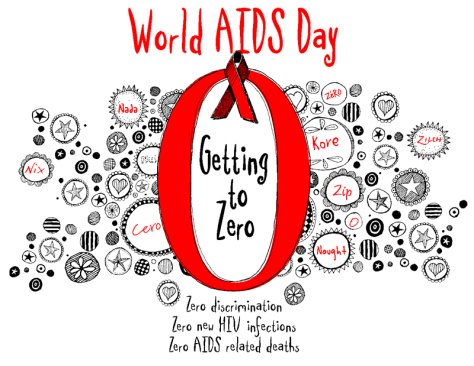
GETTING TO ZERO

First of December – World AIDS Day.  For an organization that has worked in the area of HIV/AIDS Treatment and Care for more than a decade like Gede Foundation, December 1 is always a day to remember.   

Today, we commemorate those infected and affected by HIV and salute their strength in this fight against the virus; we celebrate the individuals and organizations who selflessly offer their time, resources, talents and expertise in addressing issues related to HIV/AIDS; we are grateful to international and national funders and governments who ensure that enough resources are made available to those who need them most; we appreciate support groups and caregivers; we encourage children orphaned by AIDS to go on with life; we acknowledge the shakers and movers in communities for raising awareness and addressing stigma; and we enjoin everybody to join us in getting to the goal – ZERO!  

Special mention also goes to the formidable team members (former and current) of Gede Foundation for having gone this far in our fight against HIV/AIDS and other related diseases.  Thank you for 13 years of December 1s.  Let’s keep counting ‘til we get to ZERO. 


Jeremy Boglosa

PD: OD/SS

December 1, 2015