VISIT TO GEDE OF DR ROSIE MAYSTON OF KING’S COLLEGE LONDON

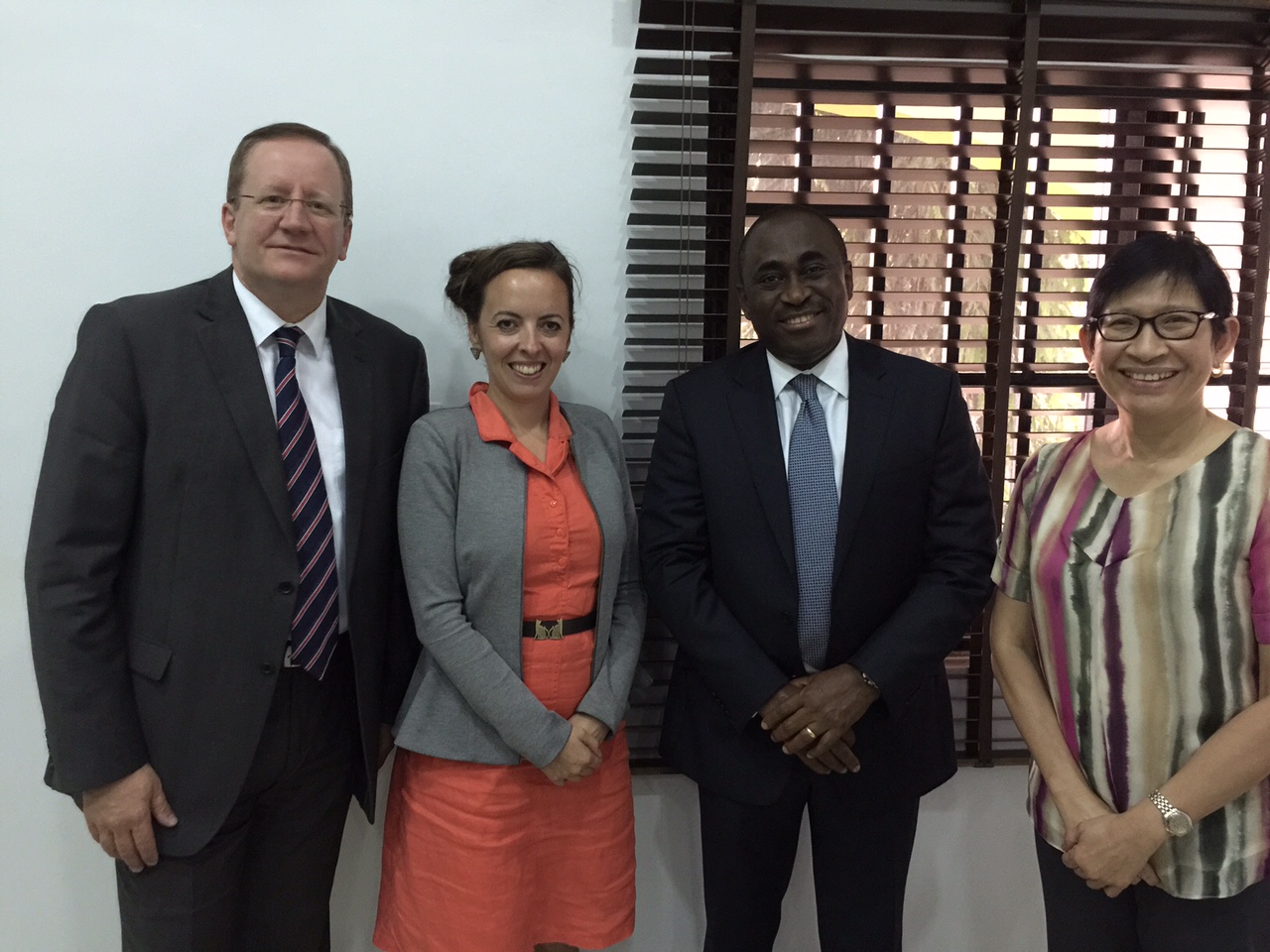
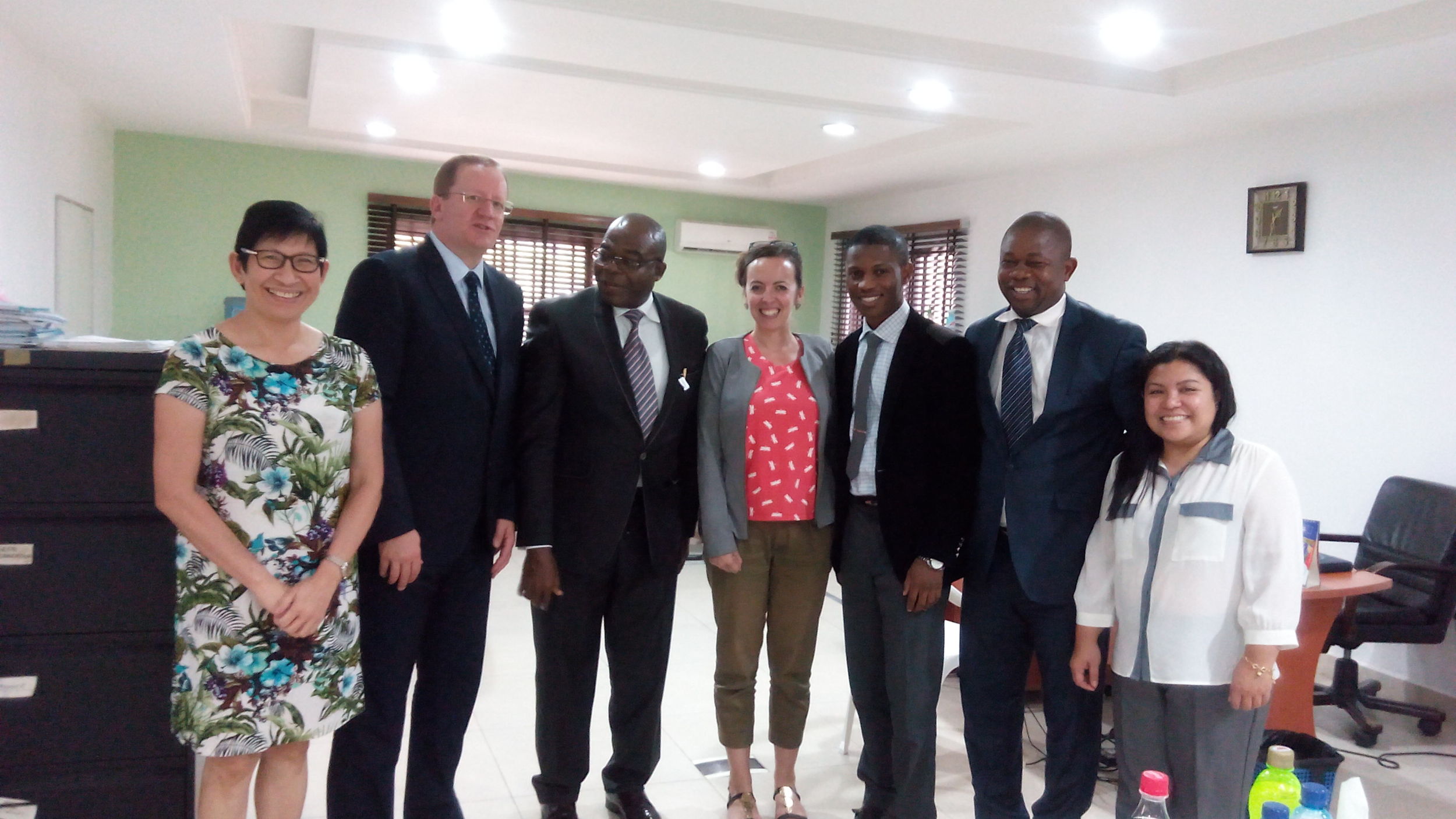
As regular Gede blog readers will know, last week the Foundation hosted the visit to Nigeria of King’s College London Senior Researcher, Dr Rosie Mayston. In addition to meeting partners and agencies such as CBM, the Karu Behavioural Medicine Unit, IHVN, NACA, as well as Gede Data Collectors and Facility based staff at Asokoro, Garki and Gwagwalada Hospitals, Dr Mayston spent time with Gede team members discussing ways in which the Foundation and King’s College could work together closely in future. In particular, there is a pressing need to undertake high quality research into the impact of depression and substance abuse on people living with HIV-AIDS, while the practical implication of research needs to be reflected in working with agencies such as NACA and NEPWHAN to ensure that mental health screening, treatment and referral skills and integrated into HIV-AIDS care and support regimes.

Such an initiative would help to lessen the impact of mental health conditions on both HIV-AIDS (such as treatment uptake and adherence) and general health outcomes (such as getting enough sleep and following a good diet).


Gede would like to take this opportunity to formally thank all partners and agencies who interacted with Dr Mayston last week and encourages readers of the Foundation’s blogs to keep up-to-date with our latest work by visiting Gede’s website regularly.


BREAKING STEREOTYPES ASSOCIATED WITH ADMINISTRATIVE AND SUPPORT SERVICE FUNCTIONS

In a routine phone call with my mother back home, she informed me that my niece has landed her first job.  Excited about this development, I called my niece to congratulate her and I started asking about the new job then she cut me off (in an embarrassed voice) saying, “It’s not really a big deal because it’s just an administrative assistant position in a small company where I’m expected to do the “lowly tasks” of filing, typing, running errands, answering phone calls, arranging transportation, ensuring that cleaning is done, and even serving coffee or snacks in short, “dakilang alila” (great servant) who is at the receiving end of all blames when things don’t turn out well.” 

 Alas, my niece’s perspective of her new job is rooted in the old-school (but still very much existing) stereotype of an administrative role.  I often hear workers in the area of administration, support services, logistics, transportation, security, and the likes refer to their job roles with some level of embarrassment and insecurity.  Rarely I’ve heard a driver introduced himself as one and would say he’s proud to be one.  Instead, they often say “I am ONLY a driver” and some of us also refer to them as “ONLY a driver/cleaner/secretary/etc.”  A lot of factors have contributed to these stereotypes --- from job requirements, to levels of education, pay structure, skills and the way society has labeled and treated this cadre of the workforce.   

Having been an insider in this line of work (at different capacities), I firmly believe that these stereotypes should not be too common in this modern world and age.  True that each organization has structures, job titles, roles and procedures to follow but for stereotypes (both internal and external) to persist at this age is a challenge that Senior Managers have to address and addressing it is a complicated process but not impossible.  Personally, I think it all goes back to organizational culture. 

It’s a shame that my niece feels that way about her job but I cannot blame her.  Maybe it’s a recruitment mistake; maybe she’s not the right person for the job or maybe --- just maybe, her company and the community also contribute to this.  

I am also holding an administrative function; I started somewhere at the lowest end of the ladder; and at some point I have noticed and experienced some degree of discrimination related to the nature of my profession. But I am one lucky cookie to belong to an organization whose culture puts its human resource front and center of its affairs.  My admin/finance team at Gede Foundation may always be at the background of every major activity but our senior officers and the rest of the staff never looked down on us and on what we do.  We know our place in the organization and the value of our work to the over-all goal of the organization.  And we never felt that we are left behind in the area of capacity development.  My team does not feel left out nor ignored in our daily operations; our expertise is respected and we are allowed to learn new skills and relearn old ones.  We are not pigeon-holed to be stagnant in our jobs and remain the same person day in and day out.  This is how we do things here but we will never stop learning to be better at what we do. 

 I am Jeremy Boglosa, I represent a team of administrative and finance support services staff also known as drivers, cleaners, receptionists, secretaries, administrative assistants, logistics officer, cashier, assistants and the likes.  We deal with the nitty-gritty details of things --- from procurement, to repairs and maintenance, to catering, to typing and filing, to answering phone call, the list goes on and on.  Yes, we make mistakes but we learn from them.  We are always at the background but we are the proudest when the show turns out excellent.  We are proud of our team because our organization never makes us feel otherwise.   

I look forward to the time when majority of administrative/support service professionals (in whatever level) really take pride in what they do and realize how important they are in an organization. 

Borrowing a leaf from Goa, India

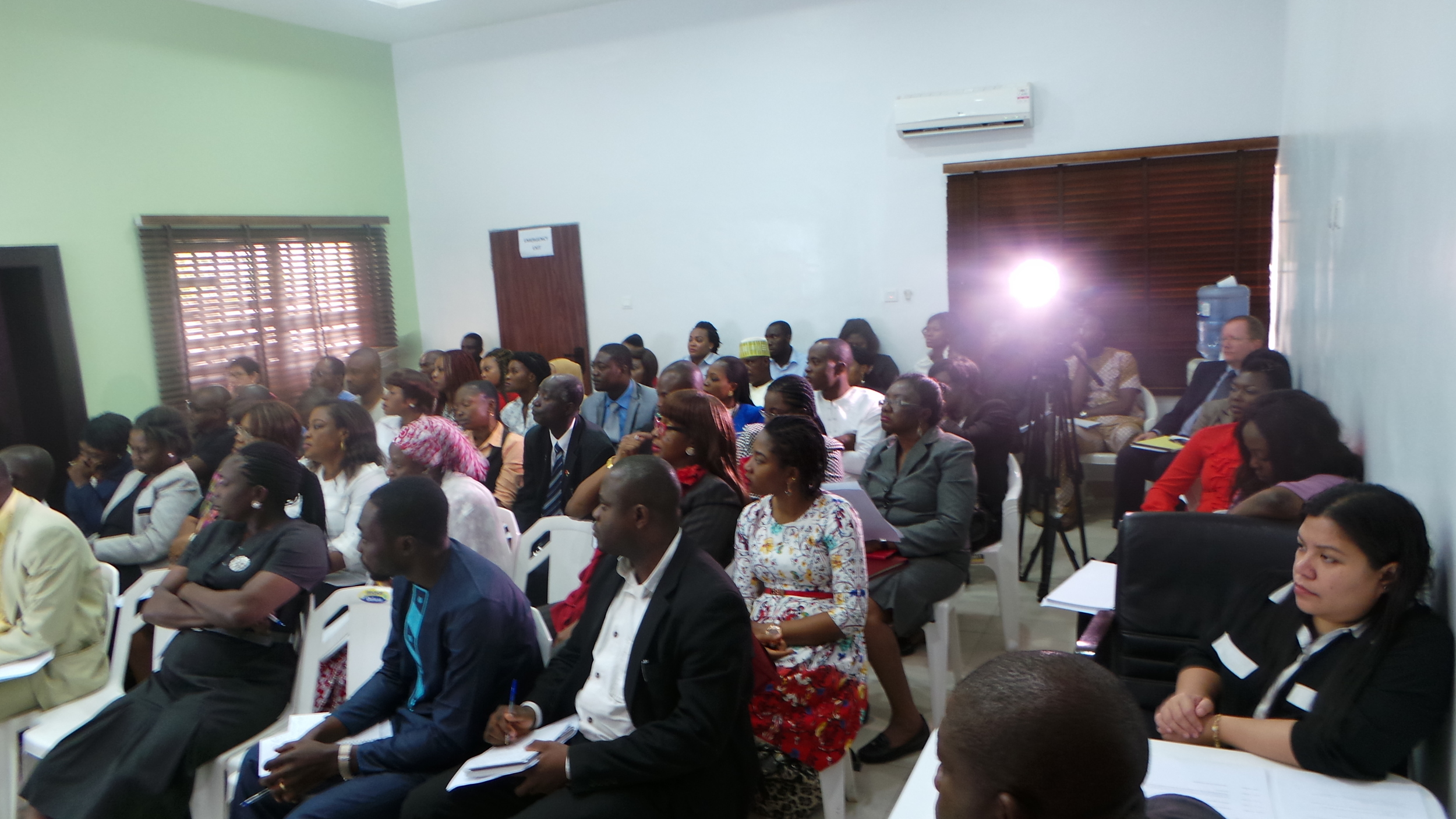
On Wednesday 19th August, Dr Rosie Mayston Senior Researcher at the Centre for Global Mental Health King’s College London was hosted by Gede Foundation’s Mental Health Dialogue Programme. She was present at the dialogue session to share her experience in Integrating Mental Health and HIV care and support in Goa, India. The audience was captivated by her presentation because as civil society organizations, a number of participants are in one way or the other involved in HIV/AIDS treatment, care and advocacy as well as mental health and other stigmatized health burdens.  It was a learning experience for everyone and even the speaker when it came to asking for suggestions on possible interventions for the future in Nigeria specifically.

Those mentioned included, advocacy, empowerment of healthcare workers with mental health knowledge, integration of care, and the centrality of the role of government.Rosie’s visit as a guest of Gede is to strengthen partnership initiative between the two organisations to further investigate the links between HIV and mental health 

For  more interesting sessions of the Mental Health Dialogue, please watch this space

Sharing with You: PROJECT SEMICOLON

We would like to share this organisation with you whose focus is very relevant to Gede Foundation’s current programme theme --- mental health.  We identify ourselves with organisations like the Project Semicolon because of shared interests despite the different approaches we take in addressing the issues surrounding one’s mental health status.  Knowing more about these organisations brings us to a deeper understanding of the depth, breadth and scope of the challenges that we address.  Knowing them also makes as stronger as we unite our passion, voices, strength and resources in bringing out these issues into the fore.  

Let’s start sharing resources for the purpose of learning and assistance.  If your organisation shares the same interest with Gede Foundation in the area of Mental Health, and if you would like to be featured in our blog, please send us an email to godwin@gedefoundation.org

Photo Credit: Project Semicolon (www.projectsemicolon.com) - with approval

'NEW BLOOD' IN GEDE

 We, at Gede Foundation, call the new members of our team “new blood”.  And it is with great pleasure that I introduce our new Program and M&E Manager through this platform – Mr. Kizito Ebhohimen. 

 Kizito joined Gede Foundation on August 3, 2015 and as a “new blood” to the Foundation, much is expected of him in area of program management and M&E.  He is also expected to bring in new ideas, fresh flow of energy and different perspectives.  However, Gede Foundation’s HR culture is not a one-way ticket; it is a give-and-take relationship that goes through a peculiar process rooted in the Foundation’s culture. 

 Please be on the lookout for Kizito’s contribution to our blogs as he will be sharing with you his experience at Gede Foundation.

 Jeremy Boglosa

PD: OD/SS

GEDE REPORTS BACK TO NACA’S TECHNICAL WORKING GROUP

Tuesday August 11 2015 Abuja

Today, as Co-Chair of the National Agency for the Control of AIDS’ Sub Committee of Mental Health (NACA), Gede delivered a report which highlighted the work of the Sub Committee in planning for the integration of mental health into HIV-AIDS care and support. The work of the Sub Committee has considered a number of issues including a key reflection on the practical ways in which mental health screening, treatment and/or referral can be integrated into the busy working lives of, for example, HIV-AIDs Adherence Counsellors. At the meeting today, the full Technical Working Group supported the Sub Committee’s work to date and agreed on a schedule which will see, in early September, the submission of formal integration plans to NACA. Watch this space for further developments.

WHY STRATEGIC PARTNERSHIP?

DSC_0494.JPG

Would you like to have a bigger slice of a smaller pie or a smaller slice of a bigger pie?

The purpose in life is to collaborate for a common cause; the problem is that, more often than not, we struggle to define what a 'common cause is' nobody seems to know what it is.

 Meaningful partnerships are the foundation for success and Gede has recognised that from the onset and until now, continue to build on existing and future opportunities.  Gede has made continuous improvements by sharing with others and directing its resources and capabilities to projects considered most important to mankind. Gede's mandate is to bring underserved and stigmatised health burdens out of the shadows through research, partnerships and advocacy - but, in reality, partnerships are the essential building block to everything we do.

As an organisation that addresses stigmatized and underserved health burden, the success so far has been linked to genuine partnership with relevant stakeholders especially on the field of HIV-AIDS and Mental Health. This has allowed Gede to establish a Coalition in Nigeria, of Civil Society Organisations (CSOs) group, known as Global Awareness for Mental Health Association, with increasing membership from different organizations for the sole aim of mainstreaming and promoting Mental Health in various thematic areas of their interventions. In practical, non NGO terms, this means aiming for a far wider understanding of mental health than is currently the case across society.

The work of this Coalition will collectively bring to the front burner, the need to educate, advocate and sensitize communities within different target populations on Mental Health.


Finding Your Patch of Heaven

As we continue our dialogues and efforts to support mental health, I think it’s also worth sharing the measures we take as individuals to ensure our personal level of mental stability. 

I was raised in a humble home surrounded by plants – growing, flowering, fruit-bearing plants.  When I was growing up, family time was equated to planting, weeding, watering the plants and harvesting fruits or picking flowers.  The smell of newly-cultivated fertile soil, uprooted weeds and blooming flowers make me feel at home.  Gardening is a relaxing hobby for me; it keeps me sane.  Seeing the seeds I’ve sown sprout into life gives me a deep sense of accomplishment and anticipation.  They say if you chose you vocation very well, you will never need a vacation.  I think this is a rarity in the real modern world.  We all need respite from the mundane and stressful struggles of life.  Some people spend time on sports, travels, shopping, writing, crocheting, with pets, etc.  We all just have to find that patch of heaven where we can draw some peace of mind and balance.

This is my patch of heaven; what’s yours? 

Not Just Another Set of Statistics -Jeremy Boglosa,Performance Director:ODSS

The highlights of research studies are generally expressed in numbers, statistics.  But having been a researcher myself in various capacities, I acknowledge that there is a real person with a real-life story behind each statistic. 

As one of the Supervisors for the Prevalence Study on Depression, Alcohol Use and Suicidality Among the HIV Population in the FCT,  and having attended the weekly feedback meetings from the sites, the stories I hear from the interviewers take me back to my days as an interviewer in the field.  I remember how enriching the experience of having direct interaction with your respondents was.  In fact, I think the interviewers get the most exciting albeit demanding role in a research team.  Demanding in a sense that one has to make sure logistics are in place, protocols are observed, data is gathered as recommended, confidentiality chain is kept and all the other responsibilities that come with being an interviewer.  I also consider the role very exciting because of the human interaction that sometimes becomes unpredictable yet challenging as it requires one to maintain his professionalism without losing that human connection.  This is what happens during our weekly feedback sessions with the interviewers.  We talk about numbers and accomplishments (and learn from our mistakes, too) but we also look at the human side of the story, not the personalities/identities of course, but their stories.  This process of being in touch with the human side of the research process keeps us rooted to the main reason why we are doing it in the first place --- to address issues that affect human beings; not just to showcase statistics. 


People Act Responsibly When They Care-Jeremy Boglosa Gede's PD:ODSS

Gede Foundation’s programme review (which will last for a couple or more weeks) started yesterday with informal brainstorming in a very relaxed setting.  When the day’s session was about to close, a personal experience shared by the Managing Director struck me and made me think --- Why indeed do we (as Gede Foundation) focus on stigmatized and underserved health burdens when the world does not care about the issues that we advocate for?  Do we, as development professionals, waste our talents, skills, knowledge, time, energy and resources on unpopular issues and seem to fall into deaf ears, unmindful minds and uncaring hearts? 

I needed sometime to further reflect on these questions and look for an inspiration within me.  Otherwise, I may end up losing interest in the Foundation’s cause and may eventually lose interest in giving my best into my role in the Foundation.  Being employed is good but working with an organization whose values, culture and causes/mandate are similar with mine is a blessing.  So, are we working on an issue that people truly care about? Are we dealing with issues that really get people’s attention?  The obvious answer is NO.  In the first place, they won’t be categorized as underserved and stigmatized health burdens if enough attention and resources are given to them.  Gede Foundation is currently focusing on the “underdogs” of social/health issues!  That’s the sad truth. 

However, if we do not start the discussions and establish the facts that these issues are worth talking about, investing on and advocating for --- who would?  This is what Gede Foundation would want to be known for --- an advocate for the underdogs of social/health issues.  We encourage the marginalized population directly affected by mental health disorders to show that they care and influence the rest of the world to listen and find that reason why they should care.  For it is only when people care that they act responsibly. 

Please join us as we bring that “big elephant in the room” out of the shadows. 

I give credit to the work of Meg Wheatley for putting words into my thoughts.  If you want to know more about her Ten Principles for Creating Healthy Communities, visit this site: https://sites.google.com/site/ticstcc/margaret-wheatley-s-ten-principles-for-creating-healthy-communities.