Are you one of those paying the price for corruption induced poverty?

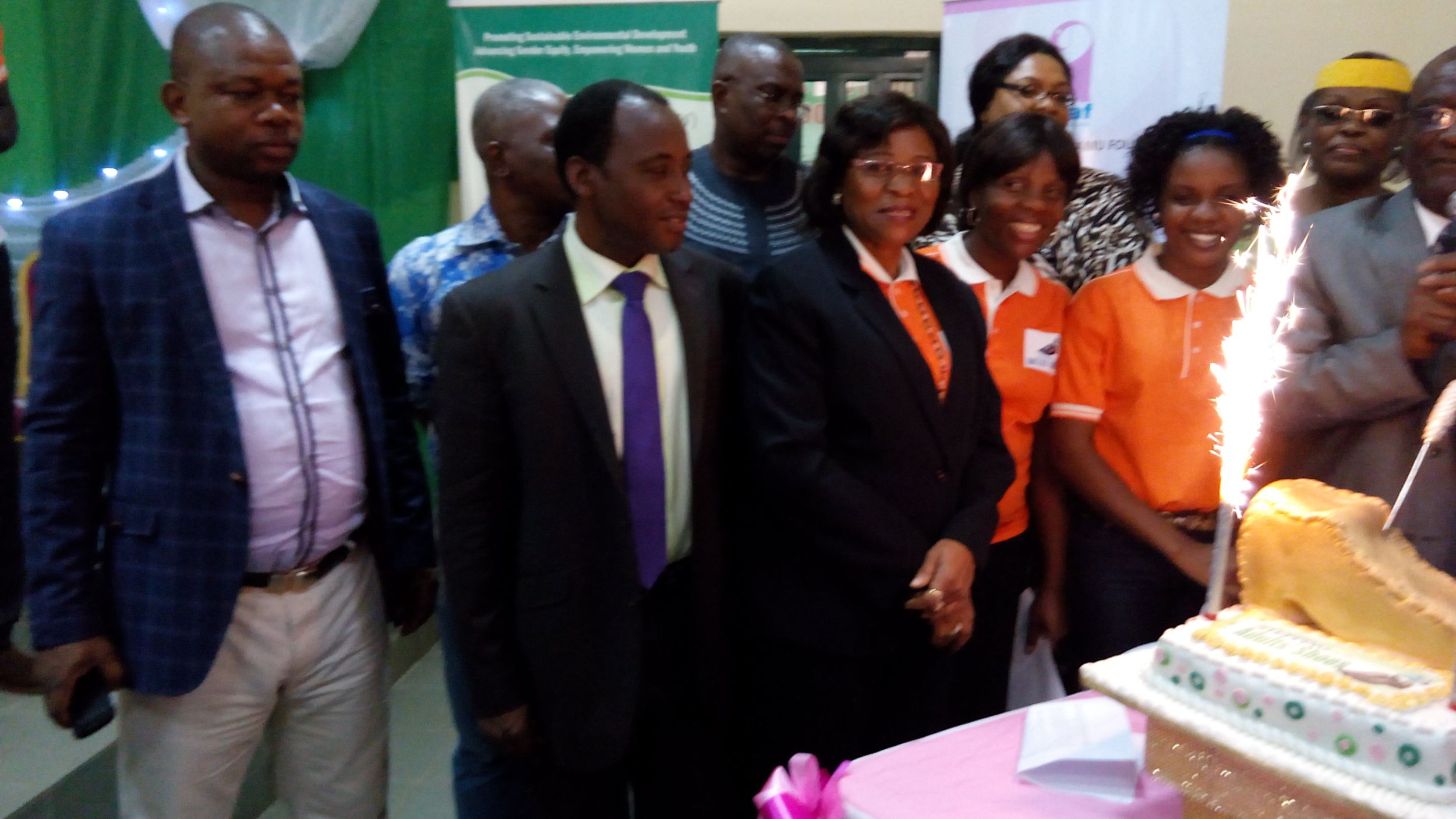
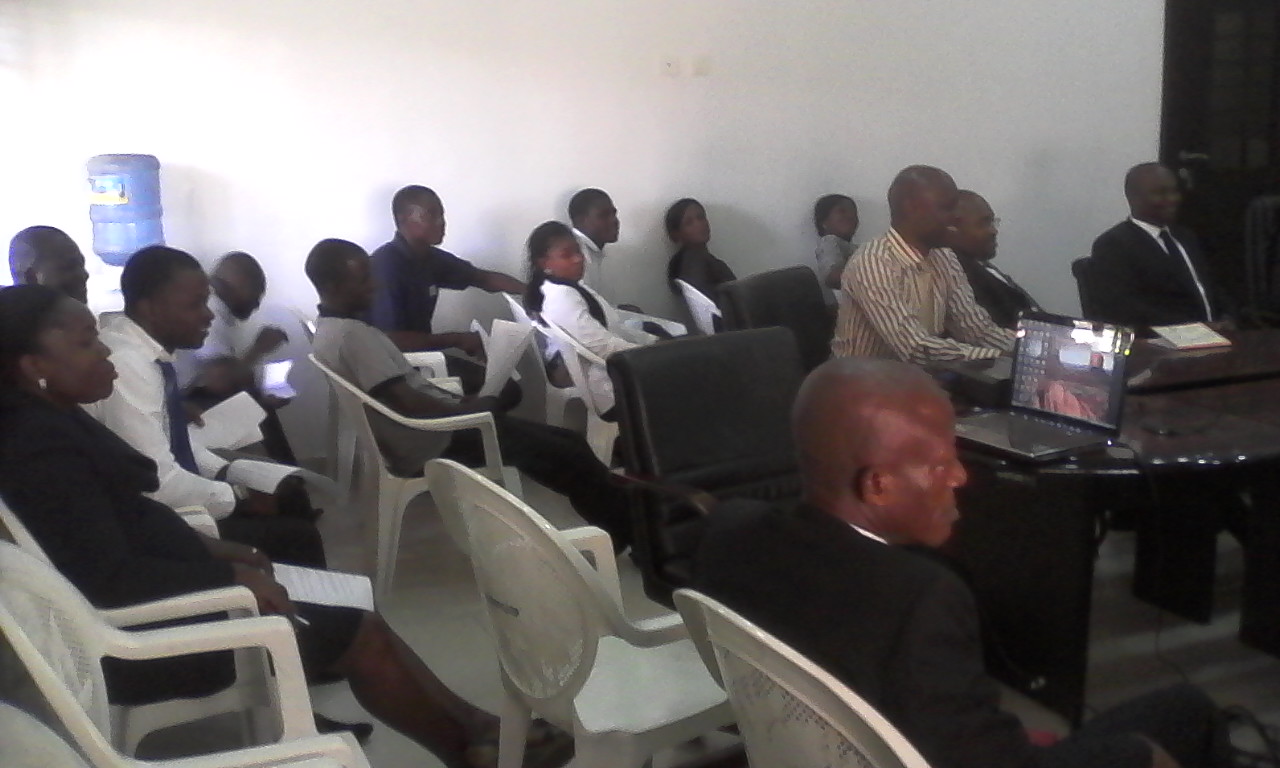
The heavy downpour in the city of Abuja, Nigeria today 29th July 2015 was not enough reason to keep participants from coming into Gede Foundation for the second July edition of the Mental Health Dialogue. It was an appointment to keep and was made worth their while with the dynamic and very informed presenter, Ekwoyi Ochigbo of the Dutse Care & Support Group under his topic ‘The Price of Corruption induced Poverty! What is it and Who pays? Kept the audience glued to their seats from start to finish with the mind blowing facts that he presented on corruption and poverty in Nigeria.  He further explained how greed, selfishness and indiscipline are the pre-requisites to corruption which eventually impoverish the majority and bring about mental health issues and   anti-social behavior such as youth restiveness, sectorial violence, terrorism, kidnapping etc., while others include substance related disorders, which are increasing in prevalence throughout the country.
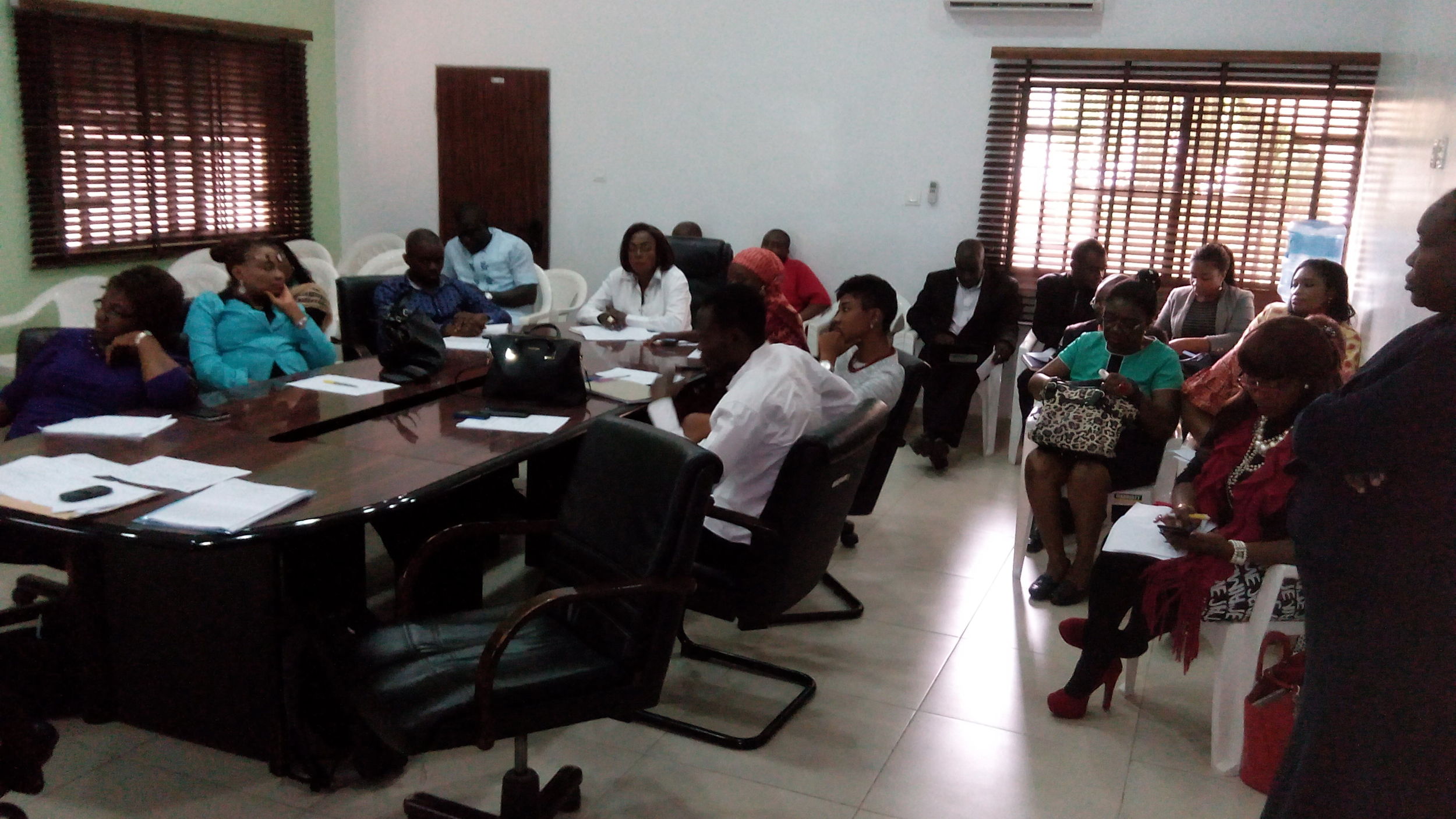
 The discussion time was soon exhausted as almost every participant had one thing or the other to say. Watch this space for more interesting sessions of the Mental Health Dialogue - Mrs Solape Obamijoko


What happens when we do NOT learn?

It is only when an organization reflects on this question that it will realize the importance of learning. Drawing from the works of experts on organisational learning such as Peter Senge and from the various models influenced by his works, let us talk about the most common factors that drive organizational learning:First, there is the permanence of change.  It does not require rocket science to explain this fact.  Change is an essential dimension of organizational (and individual) life and no matter how much we talk about “change fatigue”, the reality will never go away.  Instead of resisting change, we have to acknowledge it and see change as an opportunity to learn and adapt so that we will be better able to fulfill our purpose. Secondly, as a product of constant change, we are now operating in a knowledge age driven by information technology that seems to evolve every day.  The efficient use of information technology requires a workforce that can evolve as technology evolves.

This means that in order to catch up with fast pace of technological evolution, learning is not only a process that a worker goes through in preparation for a career.  Learning has become an essential part of what it means to do the job well.  Then the knowledge worker is born.  Although we often refer to the knowledge worker as the tech savvy individual or the technical professional, if we reflect on how much technology has influenced our lives, we can conclude that we are all becoming knowledge workers. The value of what we produce depends on what we know and what we know depends on what we have learned and can learn.

  Learning is not only the set of knowledge we gained from school but also from what we learn on the job and from other people/organizations.  And last but not the least, there is the reality of competitiveness.  As I quote Senge (1990), “the rate at which organizations learn may become the only sustainable source of competitive advantage”. And as the famous Reg Revans presented in his Learning Action Set: for an organisation to survive, its rate of learning must be at least equal to the rate of change in its external environment.   So what happens when we do NOT learn? 

This is just the beginning of our discussion on organizational learning.  Please visit this site again for more interesting topics on organizational learning. 


GEDE TO HOST DR ROSIE MAYSTON, SENIOR RESEARCHER, CENTRE FOR GLOBAL MENTAL HEALTH, KING’S COLLEGE LONDON AUGUST 2015

During August 17-21 2015, Gede will host the visit to Nigeria of Dr Rosie Mayston, Senior Researcher at the Centre for Global Mental Health at King’s College London. The visit follows the signing of a Memorandum of Understanding between the Foundation and the Centre which will develop ways in which mental health can be integrated into the treatment of HIV-AIDS in ways which deliver both positive mental health and HIV outcomes. During the course of her first visit to Nigeria, in addition to working with Gede to assess ways in which the Foundation’s cutting edge 2015 Prevalence Survey can be built on over time, Dr Mayston will deliver, as part of Gede’s Mental Health Dialogue Programme, a presentation on her innovative work in Goa, India, investigating mental health, HIV and access to care

Interviewer’s Experience with GEDE –Lincoln Egbe

I recently got a temporary appointment as an interviewer in Nigeria’s first and biggest prevalence study on Depression, Alcohol use and Suicidality among a sample of people living positively with HIV in Abuja conducted by Gede foundation and IHVN. At first I didn’t quite know what to expect and how the whole study was going to be but presently after the training and interactions with the team at Gede and at one of the Sites (Garki Hospital), I am very confident about the success of this project.

I have particularly been impressed with the warmness and reception I have received since I started this job. From the security to the desk officer to the more senior officers at Gede they have all been such fantastic friendly people and even at the site for data collection the reception was very warm and I just can’t wait for the outcome of the Study.


Prevalence Study Site Visits-Godwin, Performance Director and Supervisor for the Prevalence Study

As a supervisor on the project, I am mandated to contribute to the validity of data by ensuring that all logistic issues work as planned as well as offering support to interviewers, data collectors and coordinators. This requires a significant amount of interaction with Team Members but also allows me to see and assess key issues at first hand. As I am also very interested in the practical ways in which project impact on those involved with them, I always look forward to visiting sites and engaging with as many stakeholders as possible –especially when the initiative is as innovative as our Prevalence Study of Mental Health conditions within a large sample of people living with HIV-AIDS. Last week, I have had opportunity to interact with our facility based data collector and found the following exchange interesting-

 Godwin: Hi Dozie, I am sure all is getting on well with the data collection? Can you share with me briefly which of the modules that respondents screen the more?

 Dozie: Alcohol Use

 Godwin: In all the three modules-Depression, Alcohol Use and Suicidality, which of the modules are you surprised regarding respondents feedback and why?

 Dozie: Suicidality. This is because I feel that majority of my respondents have so much regards/respect for their faith and tend to feel that they have no reason to commit suicide. However, few are screened for suicidality.

Watch this space for more on site interactions with major Stakeholders in the study


Children with Mental Health Challenges...What Next?

Having a child who is challenged mentally could cause a number of people to shy away or shield such a child from society. But can one really blame them? At today’s Mental Health Dialogue session, Lola Aneke, certified Special Educator, Consultant, CEO of Comprehensive Autism and Related Disability Education and Training  (CADET) Academy in Abuja, took participants through a series of stages which parents go through after a child has been diagnosed. These stages range from denial to depression and finally acceptance. She started her very stimulating session with conducting an exercise aimed at making participants put themselves in the shoes of children with mental disorders. In responding to a question on if one can really tell if a child has a particular disorder based on certain behavior,  Lola mentioned that it was wrong to say a child is having a disorder without the child having been diagnosed.


Participants were informed about different stages of disorders among growing children and were also educated on how to guide children with mental disorders until treatment/correction is achieved.

One of the biggest challenges especially among teachers is the inability to spot these disorders among pupils in schools and Lola is recommending that teachers within this category be trained on how to recognise and address these disorders-to help parents and their children.

Watch this space for more interesting clips from Gede’s Mental Health Dialogue sessions.


HIV Prevention Project Meeting- Assessment / Impact

The 2 –year grant from the World Bank through SACA in Ibadan, Oyo State is ending in December 2015. The project team and the 35 grant recipients met on the 30th June 2015 to examine the reports from all players and analyse the impact so far contributed by the project.

 At the meeting, information capturing tools were upgraded to adequately reflect  the reliability and  viability of data from those obtained from the field and shared among grant recipients.Prior to this meeting, there were assessment visits to some CSOs including Gede to ascertain on-site verification of data, which   was planned to form the basis of discussion with all recipients in future. Data collection remains an integral part of the HAF-2 methodology and overall approach to addressing key issues related to HIV-AIDS awareness among key groups and community leaders.

The project has combined prevention and treatment strategies which involved activities using minimum prevention package intervention (MPPI) as a universally accepted prevention mechanism as well as referral for treatment for those accessing ART. Although people living with HIV-AIDS (who may have mental health challenges) are often seen by facility Doctors for monitoring, relatively little is done to address their common mental disorders such as depression and substance abuse because this is yet to be integrated into their treatment regimes. An introduction of mental health intervention into ART could be a good start, such that a comprehensive care and support be provided to people living with HIV-AIDS who are on treatment.

GEDE and International Day Against Drug Abuse-2015

Every year, June 26 is observed as International Day against Drug Abuse and Illicit Trafficking. Gede joined other major agencies this year to commemorate this important day by organising A secondary school seminar in Cross River State and participating in Youth Reformation and Awareness Centre (YRAC) Conference in the FCT.
In Cross River, Gede partnered with UNICEM to deliver a school-based event in order to raise awareness on drug abuse and illicit trafficking as well as to address a range of serious consequences that could follow. Students in Akampa and Akpabuyo Local Governtment Areas took time to interact on the topic ‘Drugs, Alcohol and your Health’. Over 150 students participated during the event which ended with an interactive session to find ways to address youth’s involvement on drugs by using information, education and communication materials with positive health messages.


In the FCT, a similar event took place where Gede participated in a seminar organised by YRAC, aimed at seeking ways to get young people to be positively engaged as a foundation for avoiding drug abuse and illicit trafficking. Participants at the event agreed that raising awareness on drug abuse (and sustaining it) in rural communities will allow young people to make informed decisions about their future and will help to reduce the impact of drug on local communities. About 200 participants, mainly young people, registered in various vocational training opportunities during the event and asked to remain engaged with key activities aimed at addressing the scourge of drugs in the local communities.

Organisational Development Training for CSOs-INTRAC 2015

Gede Foundation’s Performance Director for Organisational Development and Support Services, Jeremy Boglosa, attended course on Organisational Development for CSOs organized by INTRAC in Oxford, UK on June 22-26, 2015.

The primary aim of her attendance in the course is to strengthen her capacity in serving as an OD champion and an agent of change for the Foundation as it addresses stigmatized and underserved health burd...ens in Nigeria. The secondary purpose is for her to be able to transfer the knowledge gained from the course to the rest of Gede’s team members to enable the organization apply the OD process in its programs and day to day operations. The course modules were designed specifically for CSOs and Jeremy has brought home theories and practical examples from her interaction with other OD practitioners from international CSOs/NGOs.

Please revisit this section of our website as we share more specific OD topics from the course.

GEDE Promoting Personal and Workplace Hygiene

Today, 6th of July 2015, a very engaging talk on Personal and Workplace Hygiene was organized by Gede Foundation in cooperation with Miyetti Law and Janem Clinic.  This is one of a series of activities organized by Gede Foundation aimed at building  its team members’ capacity in Basic Life and Work Skills to promote learning and innovation at the individual, team and organizational levels.  The topics will start with very basic concepts for the remaining months of 2015 and will evolve into more technical areas of discussion as the process of learning progresses. The topics will depend on the needs of the Foundation and its team members in line with its projects.  Resource persons (internal and external) who are experts in the topic of discussions will be invited to facilitate the monthly talks and discussions. 

The presenter for today’s session is Miss Eliza Charles Adekalu, Miyetti Law’s Client Relation’s Officer and also an independent consultant on personal development.